

AI Music API · 5 tools
Best AI Music API Tools (2026)
Compare AI music generation APIs for text-to-song, instrumentals, vocals, and custom lyrics — from Suno and Udio endpoints to unified, watermark-free music backends.
All AI Music API tools


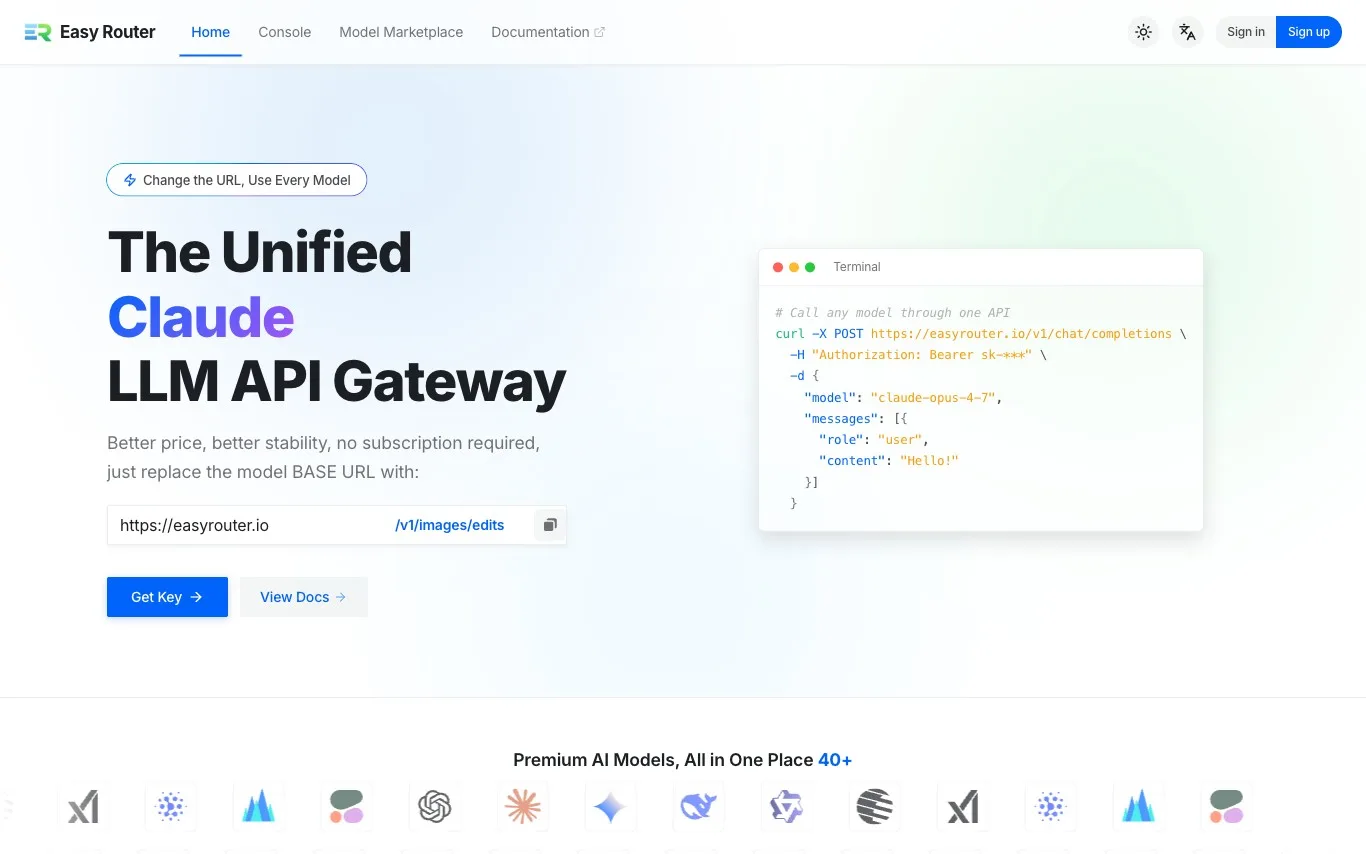

Easy Router is a unified AI API gateway providing OpenAI-compatible access to 40+ models including GPT, Claude, Gemini, DeepSeek, Midjourney, and Suno. Credits-based billing (no subscription), P99 <200ms, 99.9% SLA, and one-line URL swap to get started.




What is an AI music generation API?
An AI music generation API is a REST endpoint that turns a text prompt, style tag, or set of lyrics into finished audio — a full song with vocals or an instrumental track. You send a JSON request describing the mood, genre, and length, and the service returns hosted audio files, often through a callback once rendering finishes. Many wrap models like Suno, Udio, Riffusion, or ElevenLabs Music so one integration reaches several engines.
What these APIs do
- Text-to-music from a prompt, style, and mood
- Vocal songs or instrumental-only tracks
- Custom lyrics input, or auto-written lyrics
- Async generation with webhook or polling callbacks
- Stems, extensions, and cover or remix endpoints
- Watermark-free audio cleared for commercial use
Who uses AI music APIs
App and product builders
Embed on-demand soundtrack or jingle generation directly inside a web or mobile product.
Game and video developers
Generate adaptive background scores and loops sized to scenes without licensing each track.
Content and marketing automation
Auto-produce royalty-free music for ads, podcasts, and social clips at batch scale.
Creators wanting Suno or Udio programmatically
Reach Suno and Udio models through code for bulk jobs instead of the web UI.
How it works
You POST a prompt with parameters like genre, duration, and whether you want vocals or lyrics, and the API queues a generation job. A diffusion or transformer music model composes the arrangement, performance, and mix, then renders it to audio. Because a track takes seconds to minutes, most APIs return a job ID and deliver the finished MP3 or WAV via a callback URL or a status poll.