

AI Content Detector · 6 tools
Best AI Content Detector Tools (2026)
Compare AI content detectors that flag AI-written text, spot ChatGPT and GPT-4 output, check for plagiarism, and humanize drafts — from quick free scans to bulk API tools.
All AI Content Detector tools


MyDetector is a free AI content detector and humanizer. It identifies text generated by ChatGPT, Claude, Gemini, and other AI writers and offers a companion humanizer to rewrite detected content.
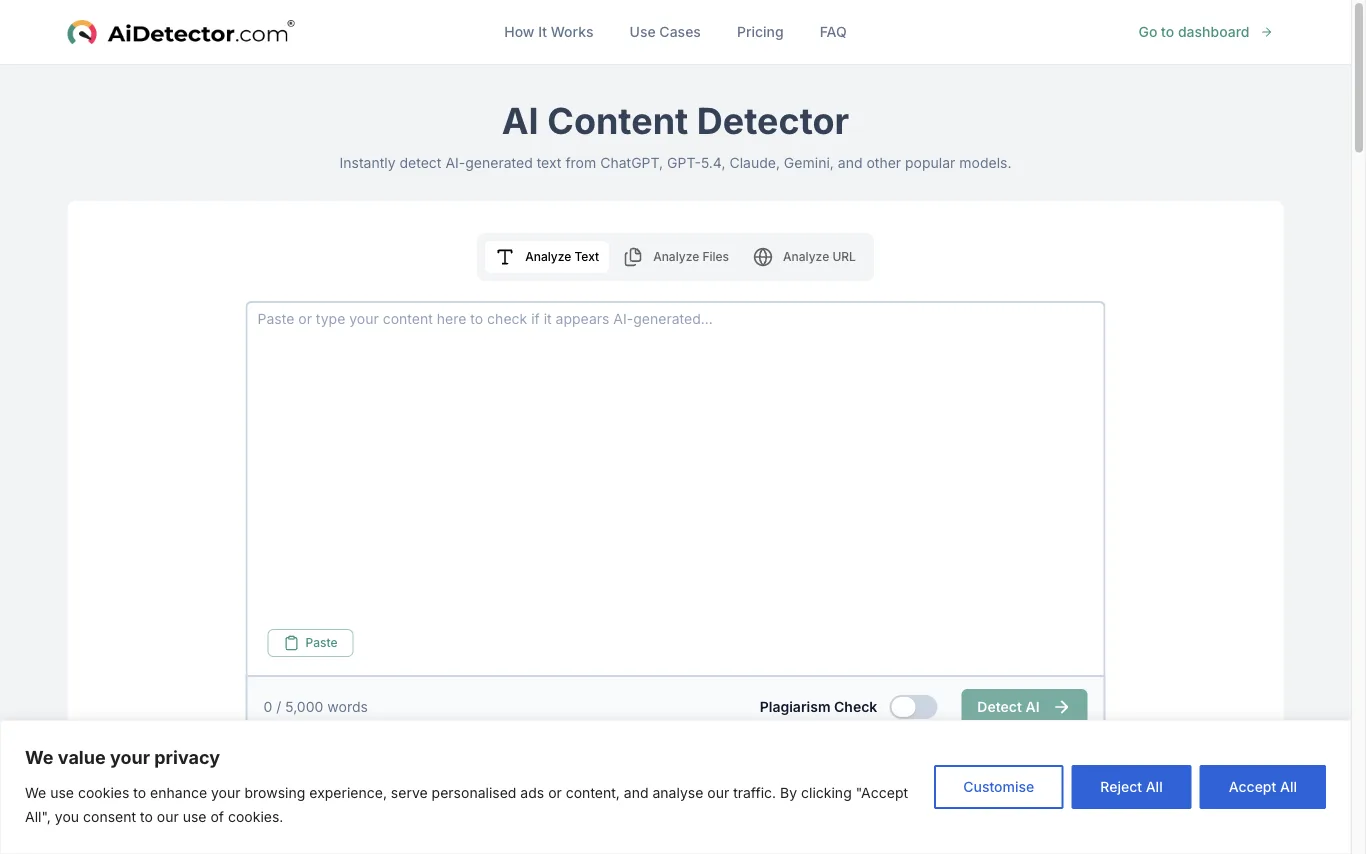

AI Detector is a free AI content detection tool with no word limits. It identifies AI-generated text from ChatGPT, GPT-5.4, Claude, Gemini, and other models with 99.1% accuracy, offering sentence-by-sentence analysis.
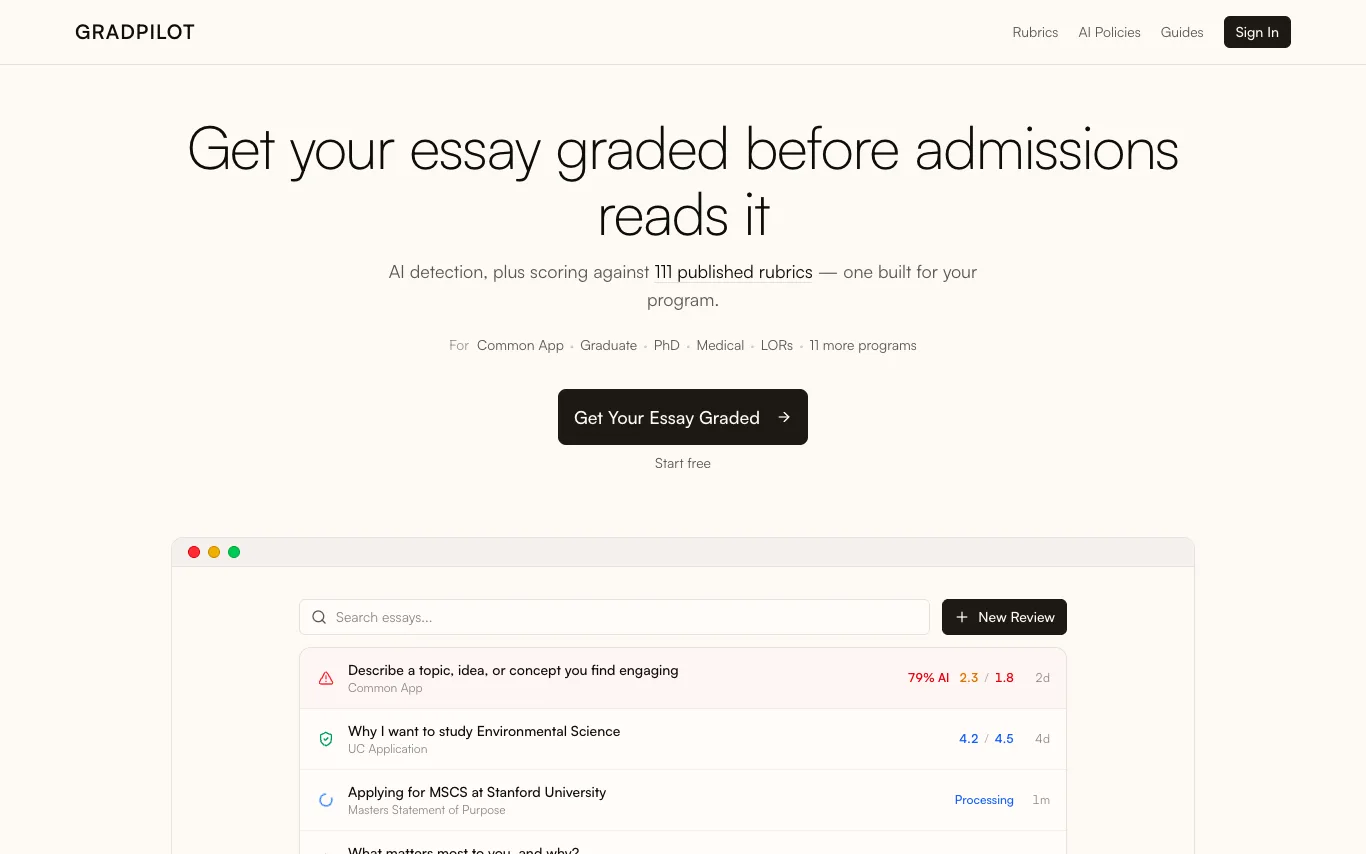

GradPilot is an AI-powered essay grading platform for college and graduate admissions. It provides AI detection, foundational scoring, and prompt-specific evaluation against 111 published rubrics for programs like Common App, MBA, PhD, medical school, scholarships, and more. Users can share reviews with mentors for feedback.
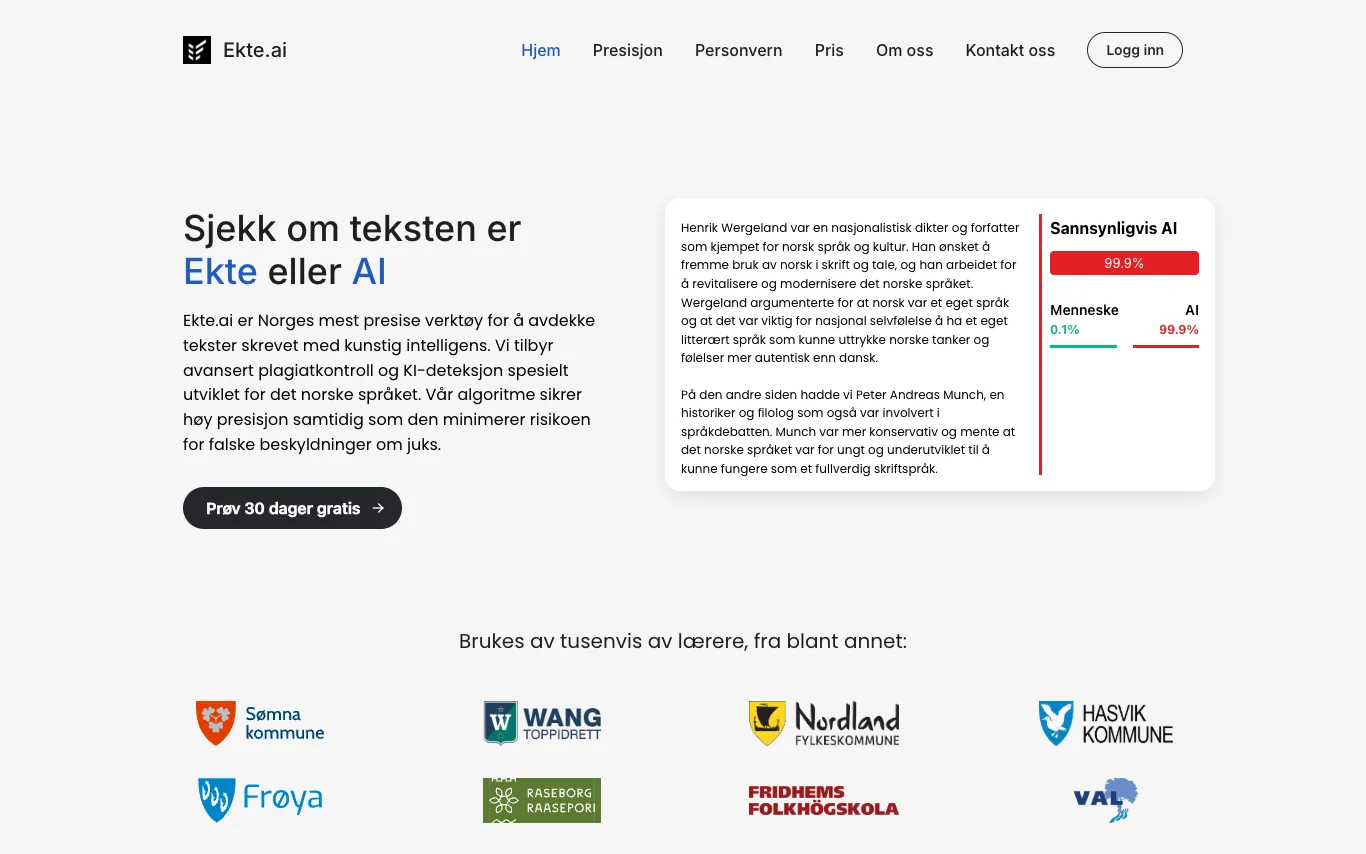

Ekte.ai er et norsk verktøy for AI-deteksjon og plagiatkontroll, utviklet med støtte fra NTNU og Center for Excellence in Education. Det identifiserer tekst skrevet av KI-modeller som ChatGPT, Claude og Gemini, med høy nøyaktighet og lav feilrate. Tjenesten er GDPR-kompatibel og tilbyr også faktasjekk, språkvask og kontrollspørsmål.
What is an AI content detector?
An AI content detector is a tool that estimates how likely a piece of text was written by an AI model such as ChatGPT, GPT-4, or Gemini rather than a person. It scans the writing for statistical patterns — predictable word choices and even sentence rhythm — and returns a probability score or a highlighted breakdown. Many also bundle plagiarism checks and humanizers that rewrite flagged passages.
What AI content detectors do
- Probability score for AI-generated versus human text
- Sentence-level highlighting of suspected AI passages
- Detects ChatGPT, GPT-4, Gemini, Claude, and Llama output
- Built-in plagiarism and paraphrase checking
- Humanizer that rewrites flagged text to sound natural
- Bulk scanning, API access, and shareable reports
Who uses AI content detectors
Educators and academic integrity
Teachers and universities screen essays and submissions for undisclosed AI writing.
Editors and publishers
Content teams verify that freelance or outsourced articles are genuinely human-written.
SEO and marketing teams
Marketers check drafts before publishing to reduce AI-detection and ranking risk.
Writers checking their own work
Authors scan and humanize drafts to pass detectors used by clients or schools.
How AI content detectors work
Detectors run text through a classifier trained on large samples of human and AI writing. They measure signals like perplexity (how predictable each word is) and burstiness (how much sentence length varies), since AI tends to write more smoothly and uniformly. The model weighs these signals into a single likelihood score, which is an estimate — not proof — of who wrote the text.