Best FluentDB Alternatives in 2026
Short on time? Start with what matters most to you.
Top FluentDB alternatives, reviewed
Each alternative below, with what it does well, who it suits, and what it costs.
1. Codex
Paid
Codex is OpenAI's cloud software engineering agent. It pairs with developers in the terminal, inside ChatGPT, and on GitHub to understand codebases, write and edit code, run tests, and open pull requests. Available to ChatGPT Plus, Pro, Business, and Enterprise users and via the open-source Codex CLI.
- End-to-end coding agent
- Multi-agent workflows
- Skills for team standards
Best forSoftware engineers, Engineering leaders, DevOps and on-call
Full reviewClaude Code is Anthropic's agentic coding tool that brings Claude directly into developer workflows. It runs in the terminal as a CLI, as extensions for VS Code and JetBrains IDEs, and in GitHub via issue-to-PR automation. Claude Code understands entire codebases, performs multi-file edits, executes shell commands, and integrates with tests, linters, and version control to ship changes end-to-end.
- Terminal-first coding
- IDE integration
- Desktop app
Best forDevelopers, Engineering teams, New joiners
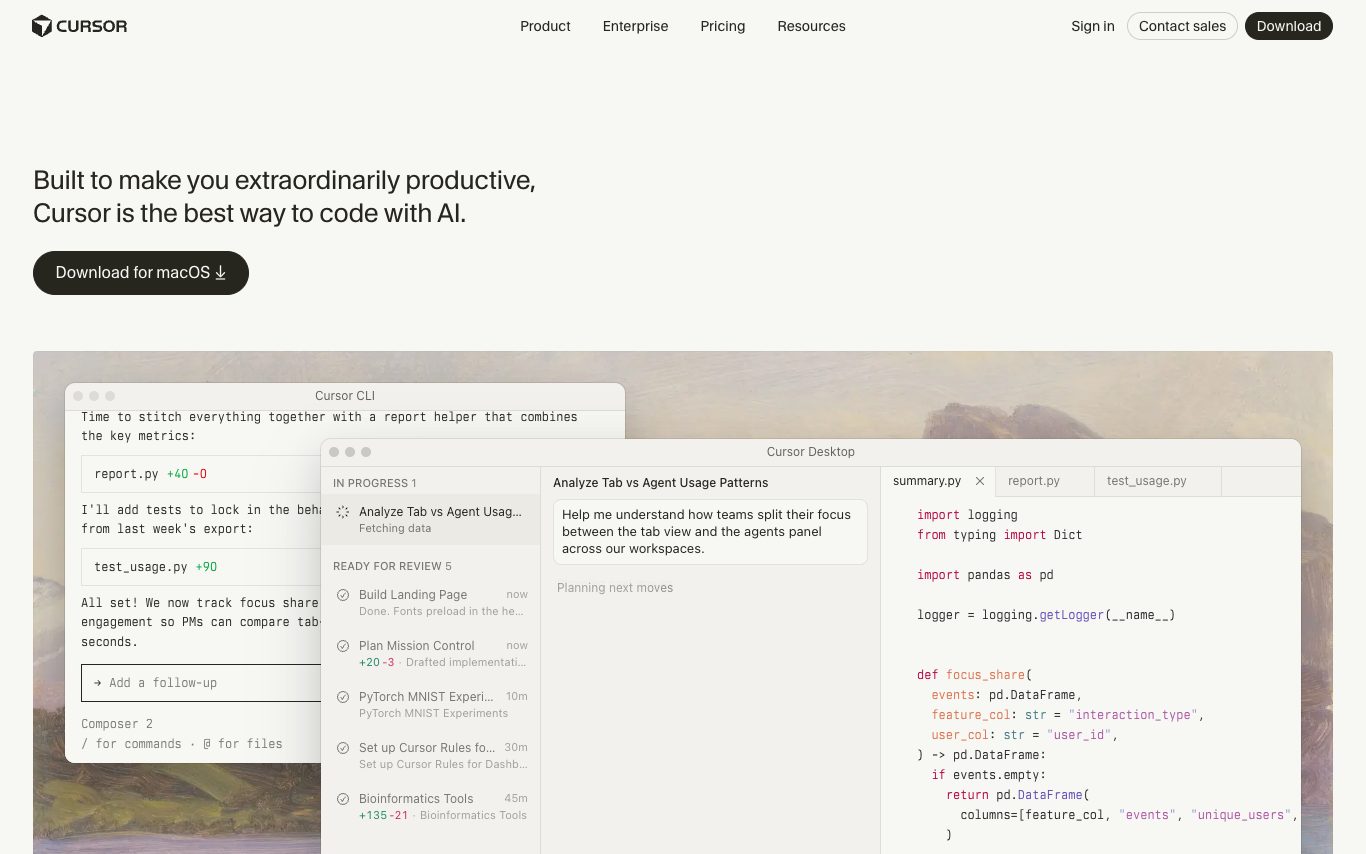
Full reviewCursor is an AI-first code editor built as a fork of Visual Studio Code. It integrates Tab autocomplete, inline chat, Composer multi-file agents, and deep codebase understanding so developers can plan, edit, review, and ship features using frontier LLMs. Cursor supports Claude, GPT, Gemini, and custom model choices, with enterprise plans adding SSO and privacy controls.
- Agentic code generation
- Parallel autonomous agents
- Terminal, Slack & GitHub
Best forDevelopers, Software engineers, Enterprise teams
Full reviewReplit is a browser-based IDE where an AI agent builds, tests, and deploys full-stack web apps from natural language prompts—combining collaborative coding, instant hosting, and AI pair programming in one environment.
- AI App Builder
- Infinite Canvas Design
- Parallel Agents
Best forfounders, product managers, enterprise teams
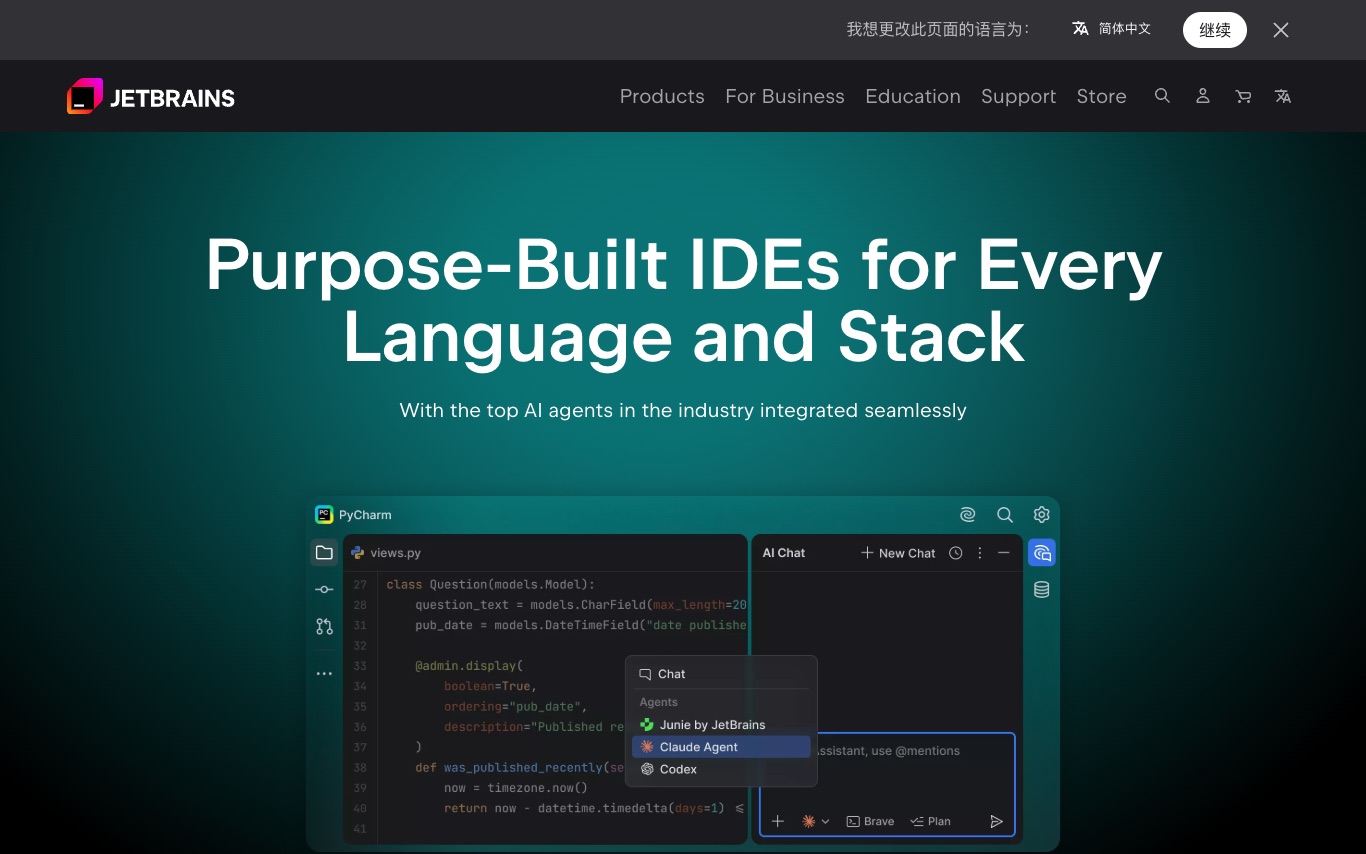
Full reviewJetBrains builds purpose-built IDEs for every major programming language—IntelliJ IDEA, PyCharm, WebStorm, Rider, GoLand, and more—with Junie AI agent and AI Assistant integrated for code completion, chat, and refactoring across the full development lifecycle.
- Purpose-built IDEs
- Integrated AI agents
- Ready out of the box
Best forJava and Kotlin developers, Python developers, Web developers
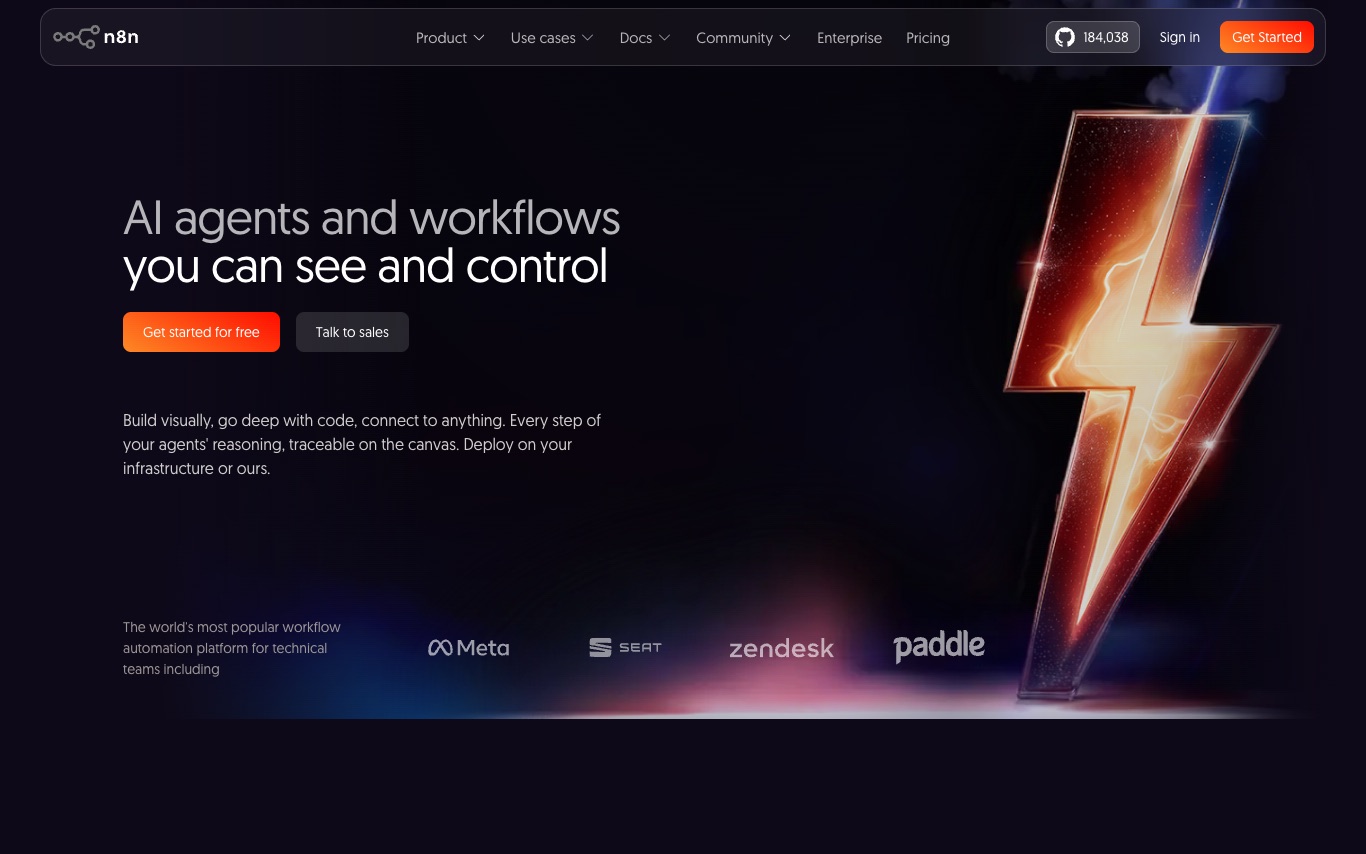
Full reviewn8n is an open-source workflow automation platform that pairs a visual node editor with full code access and AI agent nodes—letting technical teams build, debug, and self-host automations that connect to 400+ services.
- Visual canvas for AI agents and workflows
- 500+ integrations
- Code when you need it
Best forIT ops teams, Security operations, DevOps engineers
Full reviewBolt.new is StackBlitz's in-browser AI development agent. It reads a natural language prompt, scaffolds a full-stack project, installs dependencies, runs it in a WebContainer, and iterates on the code with the user. Projects can target frameworks like Next.js, React, Vite, and Svelte, and deploy directly to Netlify or Cloudflare.
- Chat to build
- Figma and GitHub import
- Design system support
Best forProduct managers, Entrepreneurs, Marketers
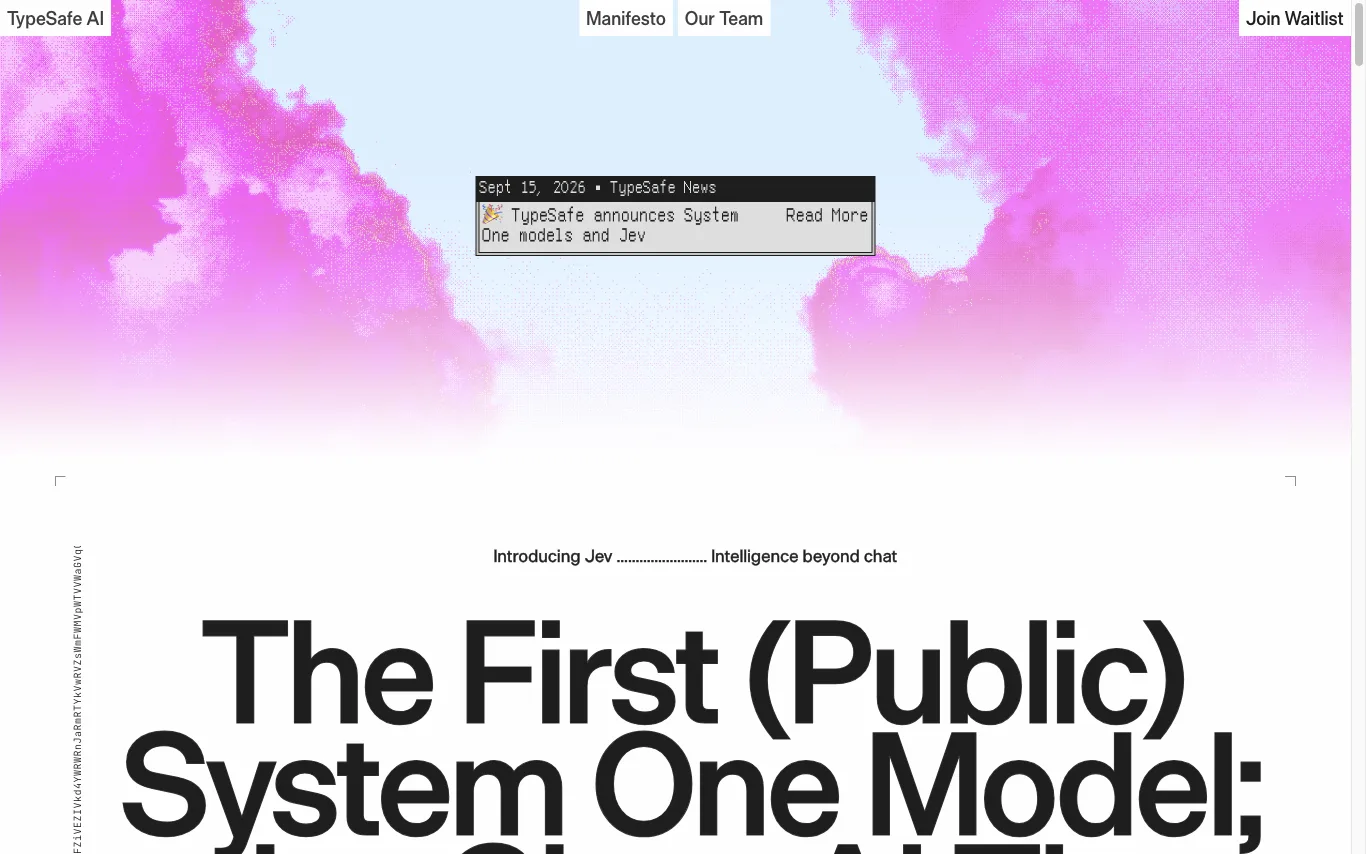
Full reviewTypeSafe AI is a San Francisco AI lab that trains models for software instead of chat. Its first public model, Jev, takes a block of state plus typed questions and returns choices, scores and truth values with calibrated probabilities, so code can branch on the result without parsing text.
- Typed decisions
- Calibrated confidence
- Three question primitives
Best forAI automation software, Search and retrieval, LLM guardrails
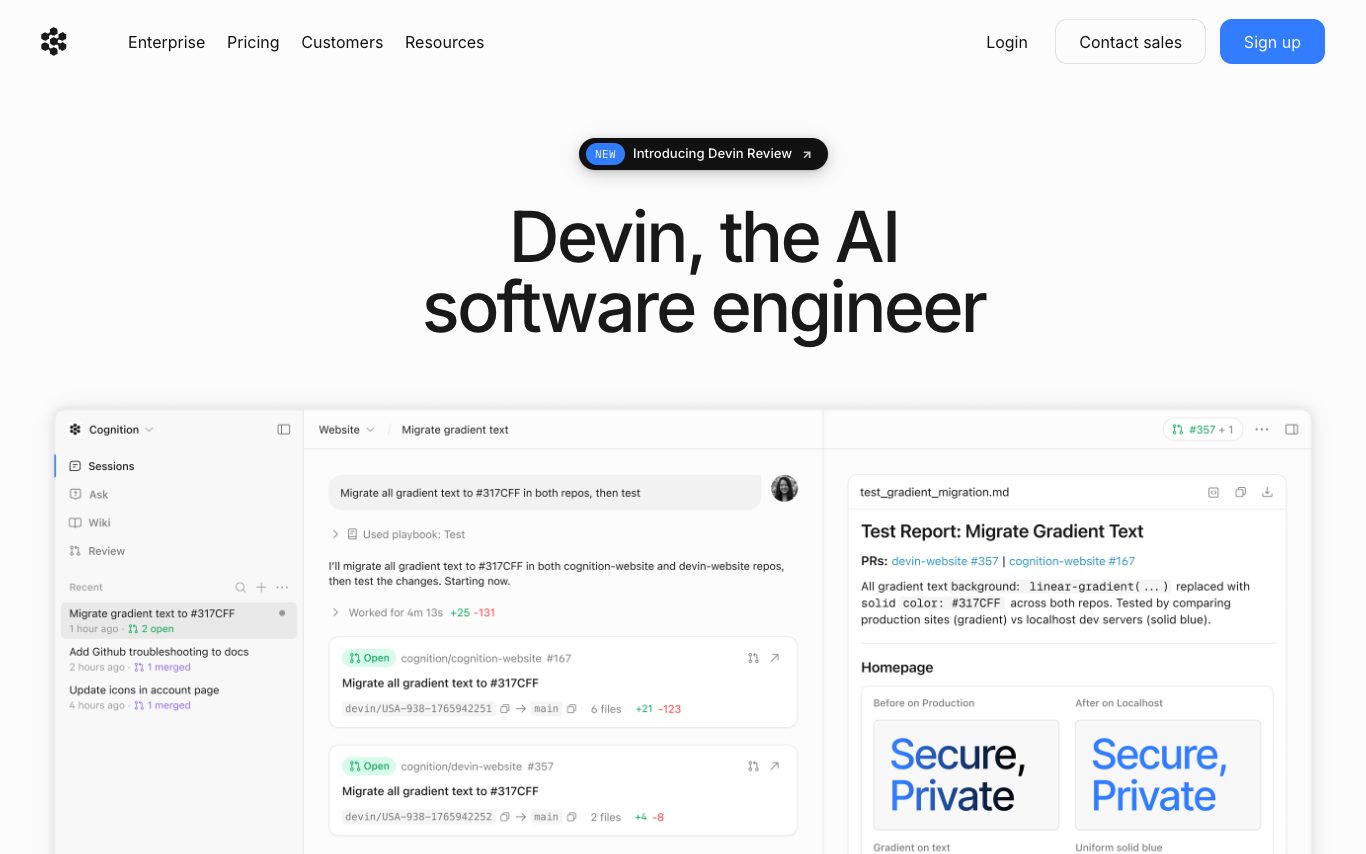
Full reviewDevin is Cognition Labs' autonomous AI software engineer. Given a task in natural language or a ticket, Devin plans the work, edits code, runs commands, and iterates inside its own sandboxed environment that includes a shell, browser, and editor. Teams use it to pick up tickets, run long-running coding tasks, and ship pull requests with human review.
- PR review & visual QA
- Auto documentation
- Code migrations
Best forEngineering teams, On-call engineers, Maintainers of legacy systems
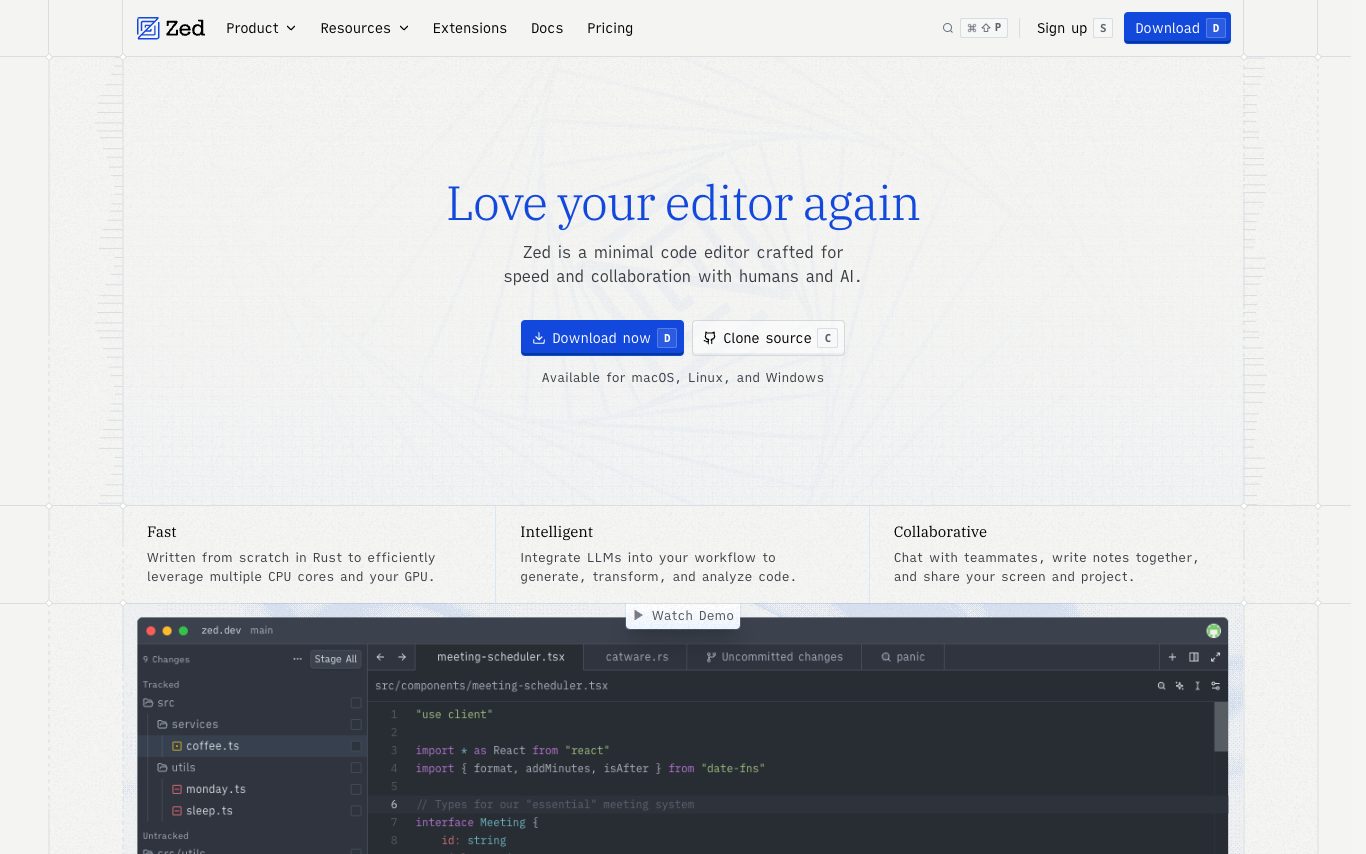
Full reviewZed is a high-performance, multiplayer code editor built from scratch in Rust by the team that created Atom and Tree-sitter. It integrates AI as a first-class citizen: Agent Client Protocol lets Claude Agent, Codex, OpenCode, and others run inside the editor; edit prediction uses the open-weight Zeta2 model; and an inline assistant rewrites selections on demand. Zed ships for macOS, Linux, and Windows with native debugger, Git, and live collaboration.
- Rust-built High-speed Editor
- LLM Code Integration
- Real-time Collaboration
Best forsoftware developers, teams needing collaboration
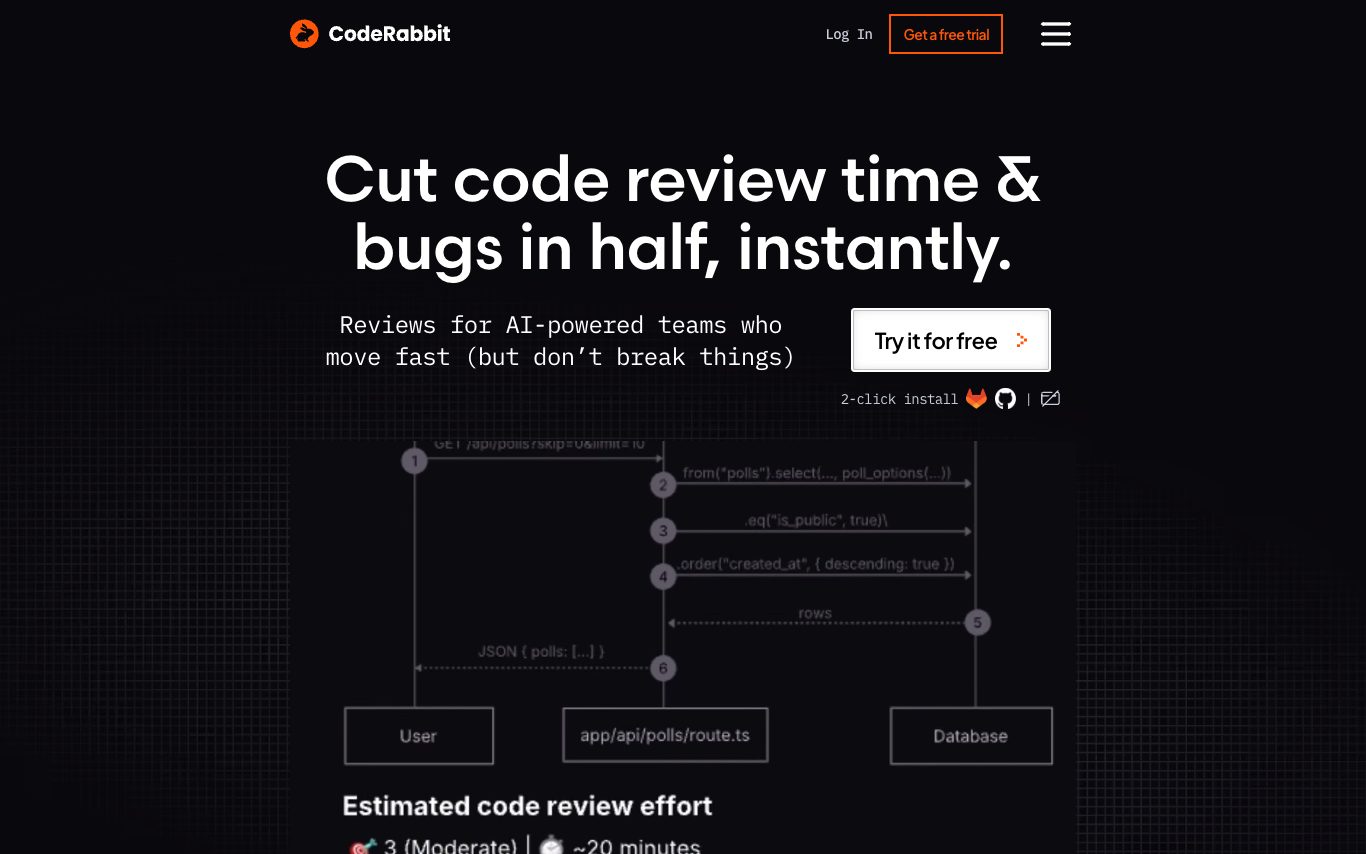
Full reviewCodeRabbit is an AI code review platform that integrates with GitHub, GitLab, and Azure DevOps. For every pull request it posts a summary, line-level suggestions, refactor and security feedback, and can auto-generate documentation. Teams use it as a first reviewer to reduce human review load while keeping human sign-off.
- AI PR review
- 1-click fixes
- Diff TL;DR
Best forAI-powered engineering teams, Fast-moving developers, Enterprise codebases
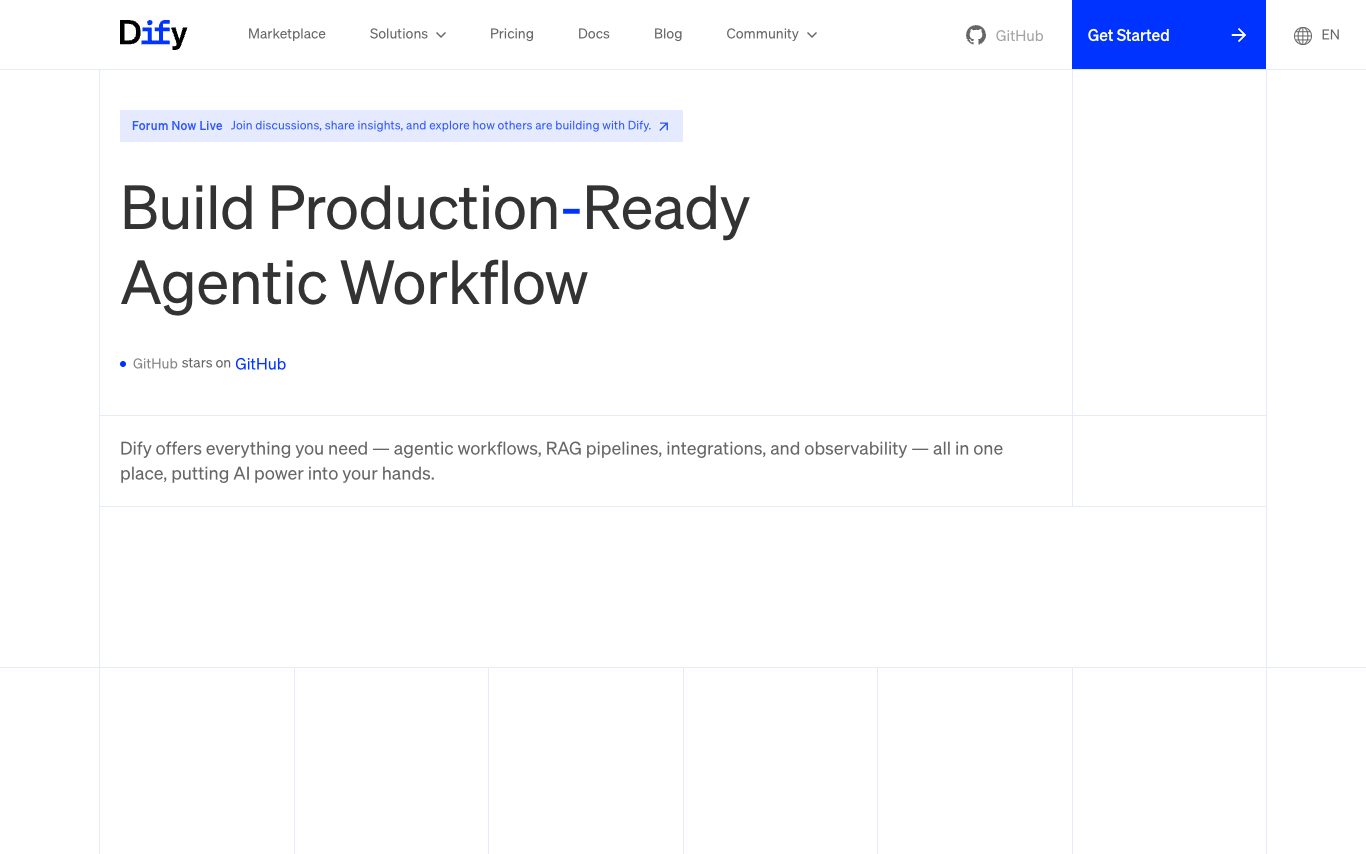
Full reviewDify is an open-source LLM application development platform. Builders use its visual workflow editor, agent framework, RAG pipelines, prompt management, and observability tools to compose AI applications over OpenAI, Anthropic, Azure OpenAI, and open-source models. Dify can run as Dify Cloud or be self-hosted via Docker and Kubernetes.
- Agentic workflow builder
- Multi-LLM support
- RAG pipelines
Best forEnterprises, Startups, Developers
Full review