

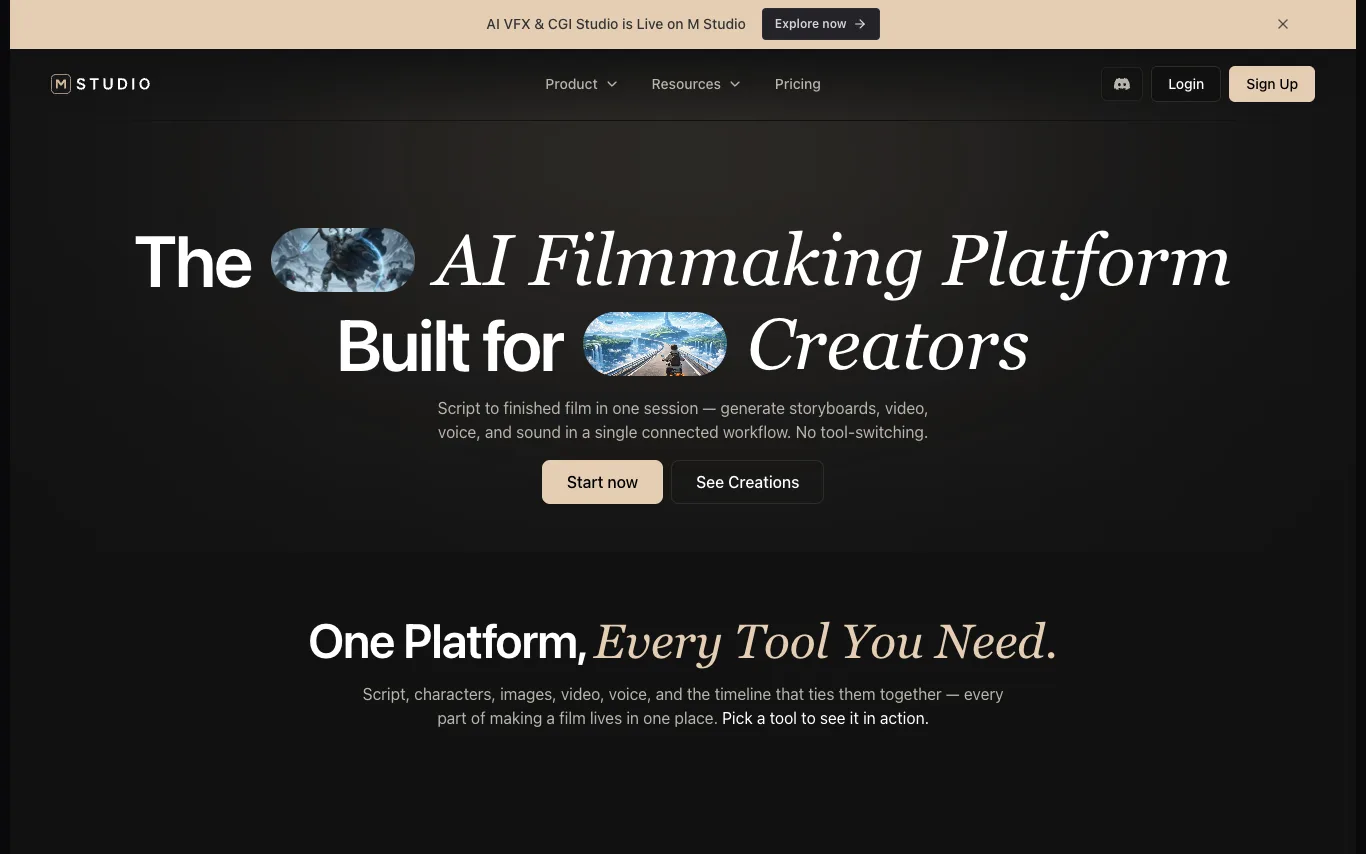

M Studio is an AI filmmaking platform that enables creators to generate storyboards, videos, voiceovers, and sound in a single connected workflow. It supports script-to-film production with tools for AI scriptwriting, character creation, image and video generation, voice narration, and timeline editing. The platform offers templates for various content types, including short films, product ads, social reels, and explainers, and integrates with AI models like Google Veo, Gemini, Kling AI, and ElevenLabs.
AI Script Writing · 1 tools
Best AI Script Writing Tools (2026)
Compare AI script writers for YouTube, short-form, film, ads, and podcasts — from idea and outline to dialogue, scene beats, and screenplay formatting.
All AI Script Writing tools
What is an AI script writing tool?
An AI script writing tool turns a topic, brief, or logline into a structured script using a large language model. It drafts hooks, narration, dialogue, and scene directions, and can match a format like a YouTube video, ad, podcast, or screenplay. Most let you set tone, length, and audience, then revise or expand any section.
Core features
- Generate full scripts from a topic or brief
- Hook, intro, and call-to-action drafting
- Dialogue and character voice for scenes
- Screenplay and Fountain formatting output
- Adjust tone, length, and target audience
- Scene breakdowns, beats, and shot notes
Who uses it, and how
01
YouTube & short-form creators
Turn a topic into hooks, narration, and a ready-to-shoot video script.
02
Screenwriters & filmmakers
Draft loglines, outlines, and dialogue, then format as a screenplay.
03
Marketers & advertisers
Write ad and product-video scripts tuned to a brand and audience.
04
Podcasters & educators
Outline episodes, interview questions, and explainer talk tracks.
How does it work?
These tools send your brief and any references to a language model trained on large amounts of text, including scripts and screenplays. It predicts the script section by section, following the structure and format you pick — hook, acts, scenes, or dialogue. You then regenerate, shorten, or rewrite parts until the pacing and voice fit.