



Lispr is a free macOS app for voice dictation and translation. Hold the Option key to dictate in your language, add Control to translate into another. Text appears at your cursor in any app. It supports ~99 languages for dictation and 32 for translation, with ~0.2s dictation and ~0.5s translation speed. The app is ~4 MB, requires no account, and is notarized by Apple.
AI Speech Recognition · 2 tools
Best AI Speech Recognition Tools (2026)
Compare AI speech recognition tools for real-time transcription, meeting notes, video subtitles, voice commands, and multilingual speech-to-text — from live captioning to developer APIs.
All AI Speech Recognition tools
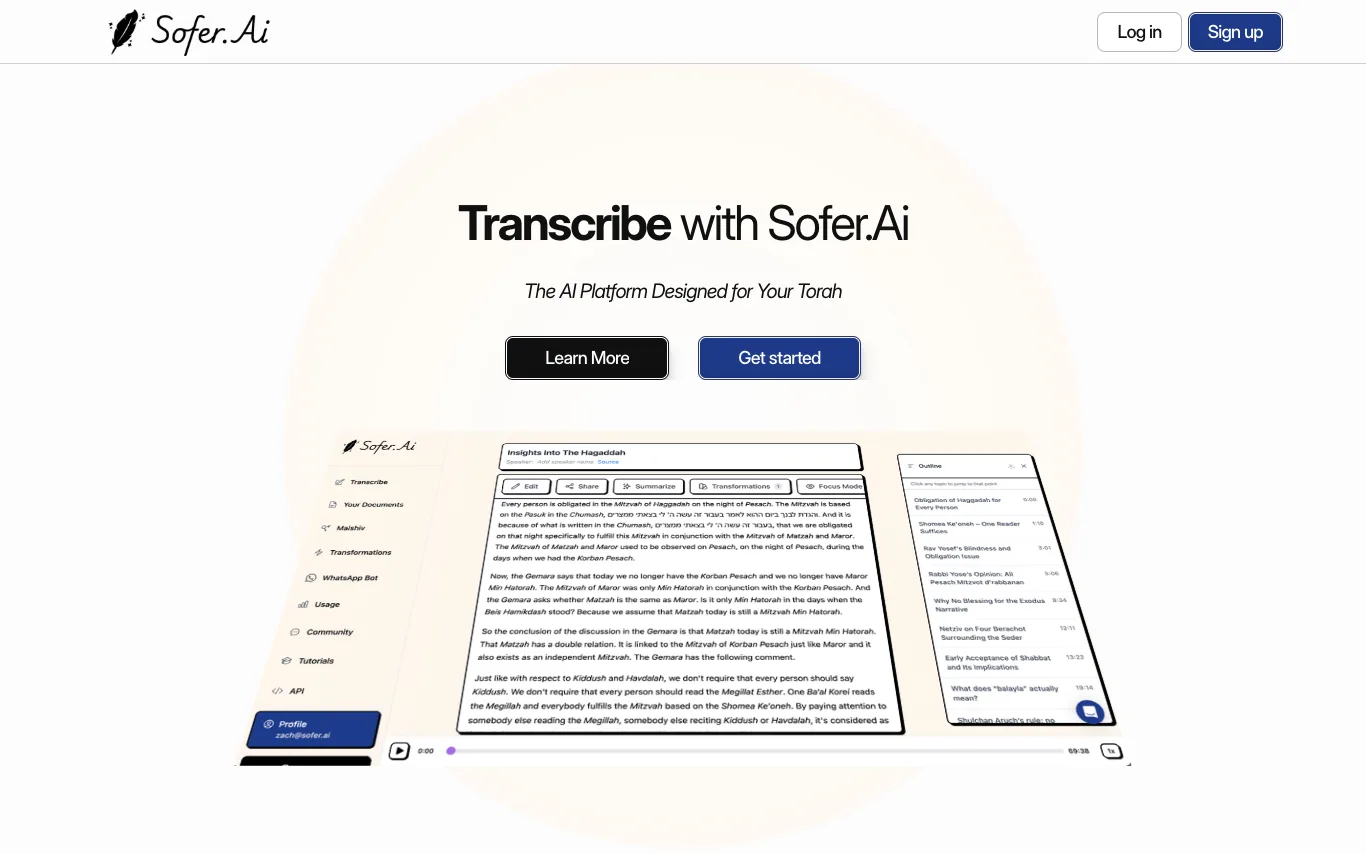

Sofer.Ai is an AI platform built for Torah. It transcribes shiurim into clear, searchable text, with tools for editing, printing, transforming, and studying. Features include multilingual transcription, intelligent playback, topic outlines, and custom transformations. It also offers Maishiv, a personal AI shoel u'Maishiv that searches your curated knowledge base.
What is AI speech recognition?
AI speech recognition, also called automatic speech recognition (ASR), converts spoken audio into written text using a neural model trained on transcribed speech. It transcribes recordings or live streams, adds punctuation and timestamps, and can tell speakers apart and handle many languages. Tools range from meeting and interview transcribers to subtitle generators and speech-to-text APIs developers build voice features on.
What these tools do
- Real-time and batch audio-to-text transcription
- Automatic punctuation, casing, and timestamps
- Speaker diarization to label who said what
- Multilingual recognition and spoken-language detection
- Subtitle and caption export as SRT or VTT
- Streaming API and voice-command integration
Who uses AI speech recognition
01
Meeting and interview notes
Turn calls, interviews, and lectures into searchable transcripts with speakers labeled and key points captured.
02
Video and podcast subtitles
Generate accurate captions and translated subtitles so creators can publish accessible clips faster.
03
Developers building voice apps
Add dictation, voice commands, or live captioning to products through a streaming speech-to-text API.
04
Accessibility and dictation
Help people who are deaf or hard of hearing follow audio, and let anyone write hands-free by voice.
How it works
An ASR model is trained on huge amounts of audio paired with its correct transcript, learning to map sound patterns to words. Given new audio, it predicts the most likely text, using surrounding context to pick between similar-sounding words and add punctuation. For live captioning it processes the audio in a stream, returning words within a fraction of a second as you speak.