

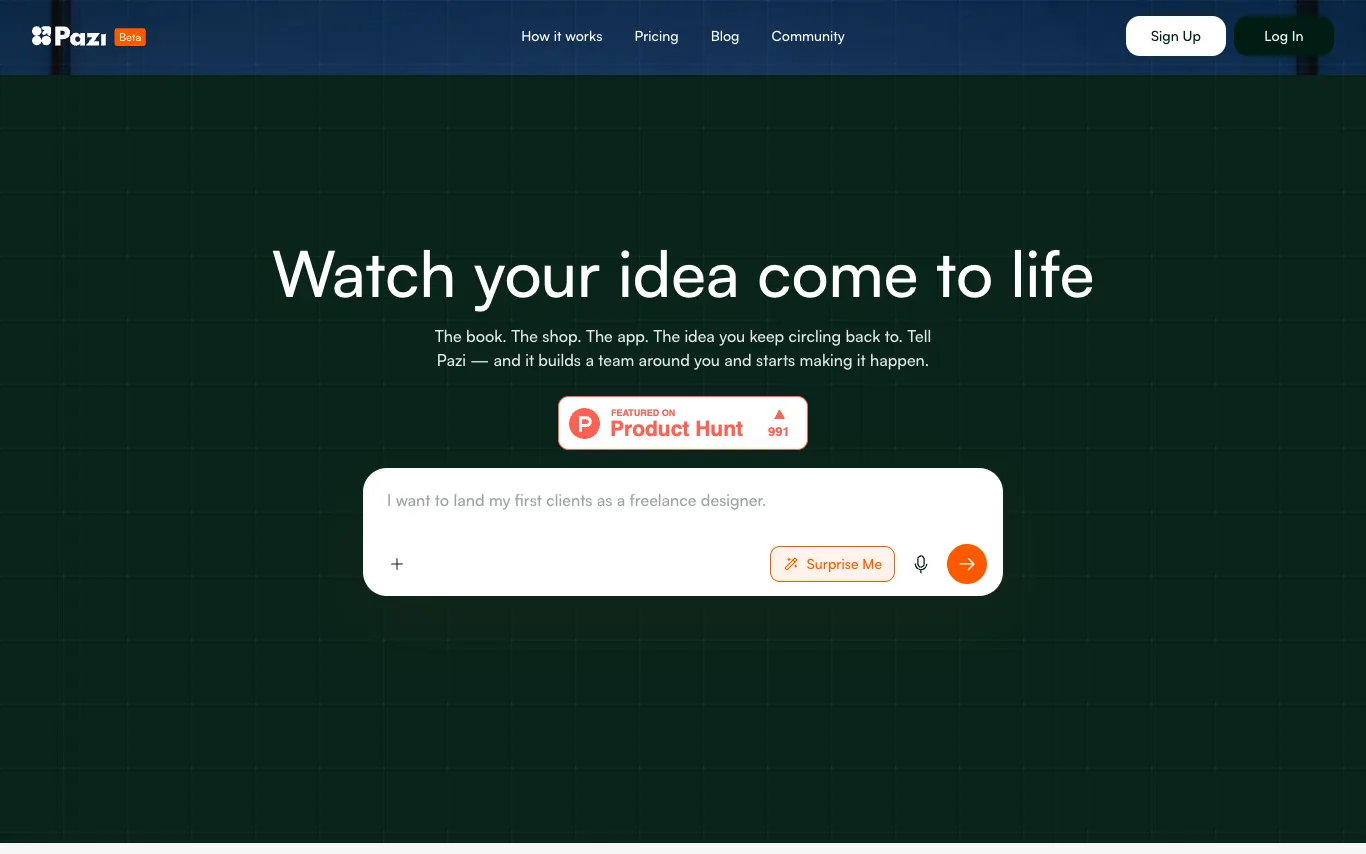

Pazi is a platform that helps you turn your business ideas into reality. Describe your idea, and Pazi creates a personalized roadmap, finds opportunities, and builds a team to execute tasks. It keeps everything in sync with a Business Pulse dashboard, showing what's done, in progress, and what needs your attention. From coffee brands to SaaS startups, Pazi supports various ventures.
AI Task Management · 1 tools
Best AI Task Management Tools (2026)
Compare AI task management tools that prioritize your to-do list, plan your day, break projects into subtasks, and automate routine follow-ups.
All AI Task Management tools
What is an AI task management tool?
An AI task management tool is a to-do or project app that uses a language model to help you capture, organize, and act on work instead of just storing a static list. It can turn a rough note or meeting into structured tasks, rank them by urgency, block time on your calendar, and nudge you when something slips. Some are personal daily planners while others coordinate tasks across a whole team.
What these tools do
- Turn notes, chats, or emails into tasks
- Auto-prioritize your list by urgency and effort
- Break big projects into ordered subtasks
- Schedule and time-block tasks on your calendar
- Draft next steps and status updates for you
- Sync with Slack, Notion, and email
Who uses AI task managers
01
Overwhelmed individuals
People with scattered to-dos who want an assistant to sort, rank, and plan their day for them.
02
Project and team leads
Managers assigning work who want AI to split projects into subtasks and track who owns what.
03
Freelancers and solo founders
Independents juggling many clients who need one place to capture and triage every commitment.
04
Meeting-heavy professionals
People whose action items come from calls and want tasks pulled automatically from notes.
How AI task management works
You feed the tool your tasks by typing, forwarding an email, or connecting a note or meeting transcript. A language model reads that input, extracts the actionable items, and estimates priority, effort, and deadlines from context. It then arranges them into a ranked list or a scheduled plan and keeps adjusting as you complete work or new tasks arrive.