


SciFig
Turn text, sketches, references, PDFs, and photos into Scientific Figures.
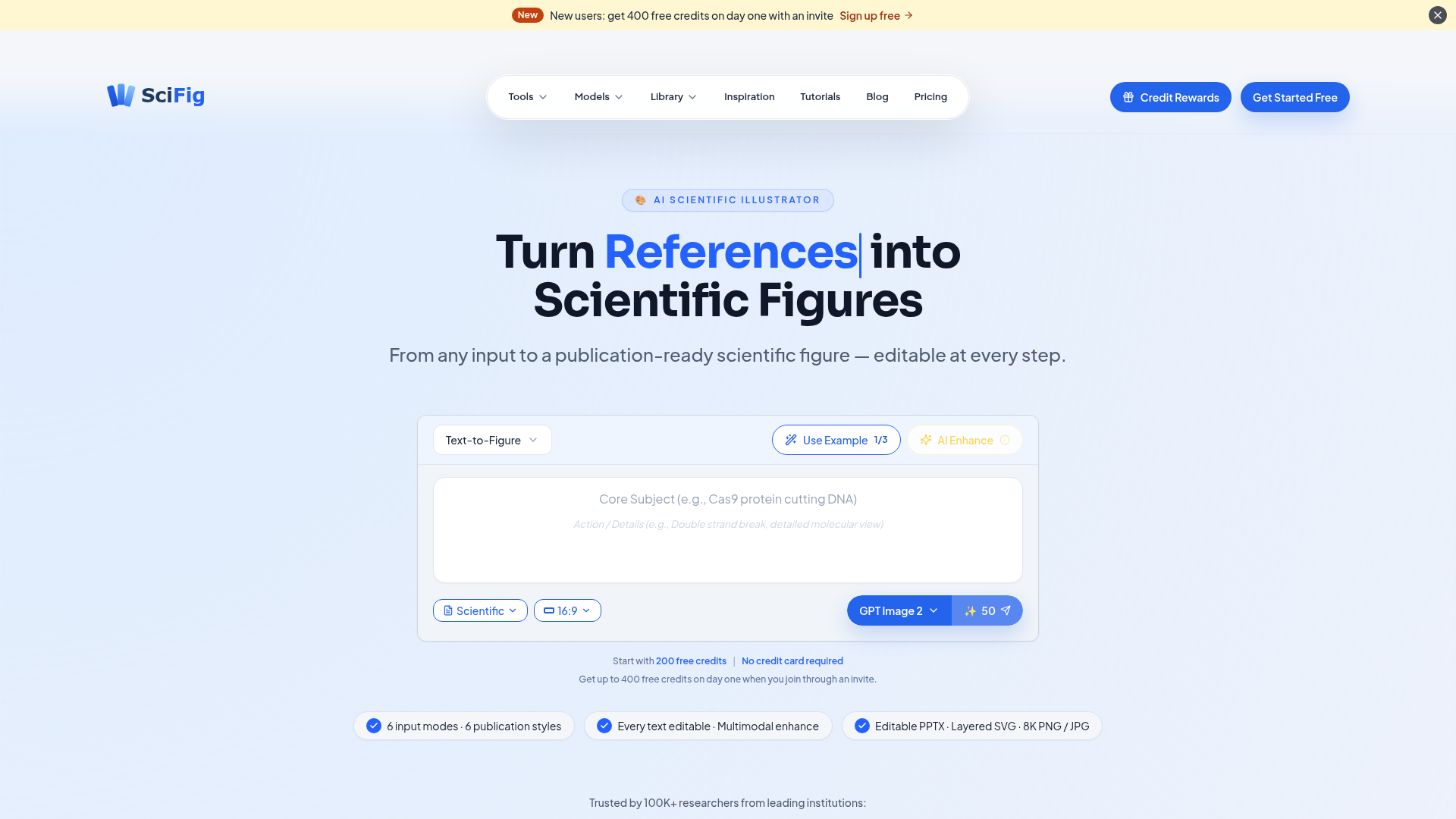
What is SciFig?
SciFig is an AI scientific figure generator for researchers, students, and science communicators. It turns text, sketches, reference images, PDFs, and lab photos into journal-ready figures across eleven disciplines, keeps every label and element editable, and exports to PPTX, layered SVG, and up to 8K raster formats.
What can SciFig do?
- 01
Text-to-Figure
Generates figures from natural-language prompts.
- 02
Multiple Input Modes
Works from text, sketches, images, PDFs, or lab photos.
- 03
Editable Output
Keeps every label, font, and element editable.
- 04
Publication Styles
Offers six styles matched to journal conventions.
- 05
Flexible Export
Exports editable PPTX, layered SVG, and 8K raster.
- 06
Vector Canvas
Edits elements with undo/redo and SVG layering.
- 07
Multi-Discipline Support
Covers biology, chemistry, physics, and eight more fields.
Use Cases
- Researcher — A researcher turns a paper's mechanism into a journal-ready figure for submission.
- Graduate student — A student drafts a pathway diagram from a plain-language description for a thesis.
- Science communicator — A communicator exports a layered SVG figure to refine in Illustrator.
Quick facts about SciFig
- Domain Rating
- Platforms
- Web
Frequently Asked Questions
SciFig Traffic Analysis
Alternatives to SciFig
Looking for a SciFig alternative? Compare these curated AI tools that offer similar features and use cases.

Claude Design
Claude Design is an Anthropic Labs product that turns text, images, documents, and website captures into polished visual work — designs, interactive prototypes, pitch decks, one-pagers, and marketing collateral — powered by Claude Opus 4.7's vision model.

Canva
Canva is a web and mobile design platform combining drag-and-drop templates, brand kits, and AI generators so non-designers can produce social posts, presentations, videos, and marketing assets without specialist software.

Leonardo.Ai
Leonardo.Ai is a generative AI platform for creating images, art, and video assets. It offers developer APIs and team tools for marketing and design workflows.