

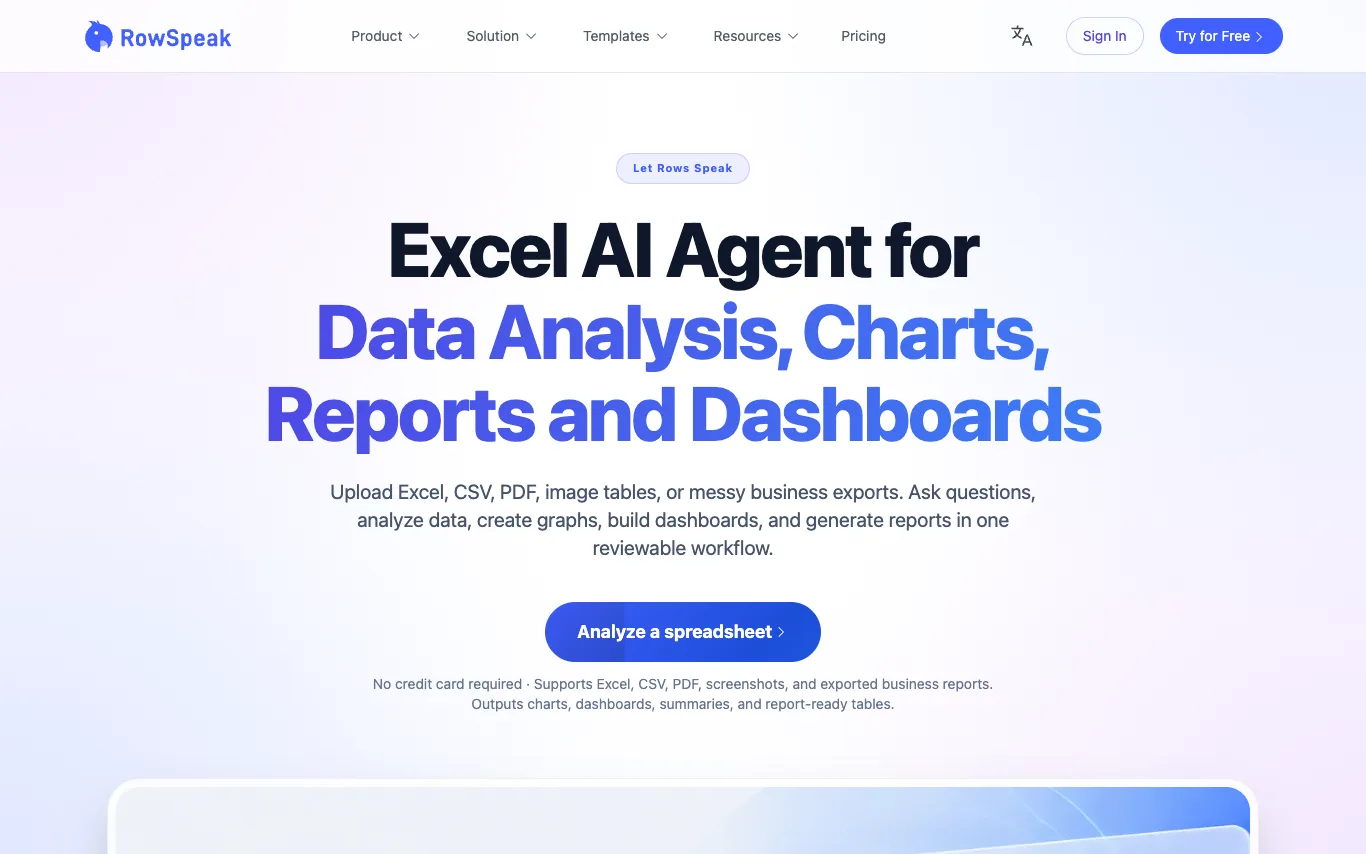

RowSpeak is an Excel AI agent that analyzes messy Excel, CSV, PDF, and image tables. It helps users find trends, explain changes, and create charts, dashboards, and reports. The platform supports natural language queries, data cleaning, and repeatable workflows, making it suitable for business teams.
AI Data Mining · 2 tools
Best AI Data Mining Tools (2026)
Compare AI data mining tools that scrape, clean, and analyze large datasets to surface patterns, trends, and predictions without manual SQL or spreadsheets.
All AI Data Mining tools


Lium is a workflow automation platform that enables users to connect and analyze their data. It provides a chat-based interface where users can ask questions about their data and receive insights. The platform includes pre-built workflows for various domains such as weather, utilities, logistics, and finance, allowing users to quickly access specialized analyses.
What is AI data mining?
AI data mining is the use of machine learning to sift through large volumes of structured and unstructured data and surface patterns, correlations, and predictions a person would miss. These tools automate the pipeline: collecting and cleaning records, clustering or classifying them, and flagging anomalies or trends. Many now let you ask questions in plain English instead of writing SQL or building models by hand.
What AI data mining tools do
- Extract data from web pages, PDFs, and APIs
- Clean, deduplicate, and normalize messy records
- Cluster and classify records automatically
- Detect anomalies, outliers, and fraud signals
- Predict outcomes with built-in ML models
- Query datasets in plain English, no SQL
Who uses AI data mining
01
Market and competitor research
Scrape pricing, reviews, and listings across sites to spot demand shifts and gaps.
02
Sales and lead enrichment
Mine and enrich contact lists with firmographic signals to score and prioritize prospects.
03
Fraud and risk detection
Flag anomalous transactions and behavior patterns hidden in high-volume operational data.
04
Analysts and data scientists
Prototype clustering, classification, and forecasts fast without hand-coding every pipeline step.
How AI data mining works
The tool first ingests data from sources you connect, then cleans and structures it into a consistent format. Machine learning models run over that data to group similar records, score them, or forecast values, learning statistical patterns rather than following fixed rules. Newer tools add a language model on top so you can ask questions and get charts or explanations back in seconds.