




Compare independent reviews of ecommerce AI tools and practical resources for customer support, product content, marketi
Best AI E-commerce Tools (2026)
Compare AI ecommerce tools for product descriptions, product photos, store building, ad copy, pricing, and shopper support — from Shopify apps to full storefronts.
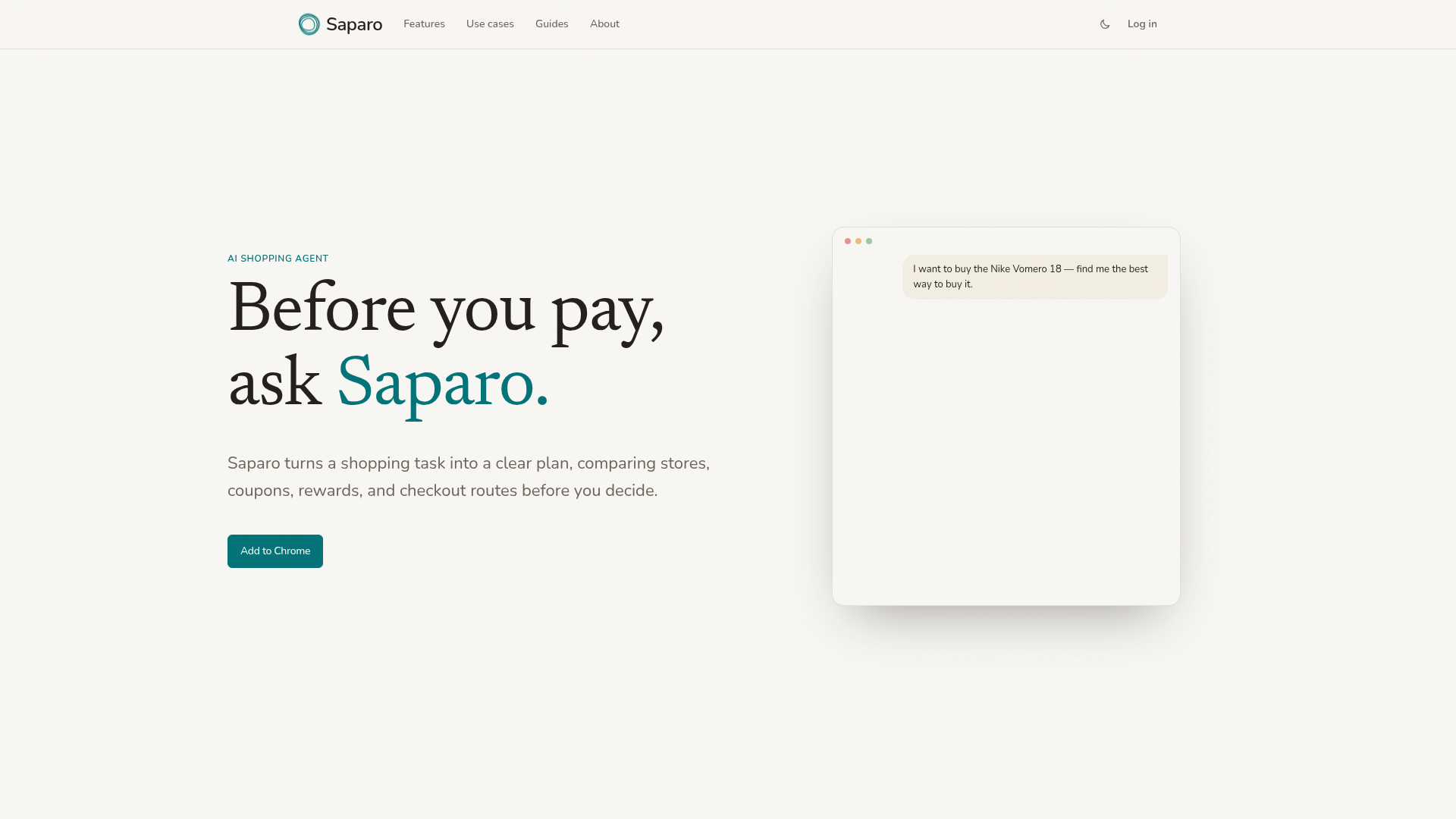

Saparo is an AI shopping agent designed to simplify online purchasing decisions. It transforms a shopping task into a clear, actionable plan by comparing various savings opportunities before a user commits to a purchase. This tool works by allowing users to paste a product link or shopping task, after which Saparo stacks every available discount, including coupons, cashback, card rewards, and gift card routes. It's ideal for online shoppers seeking to maximize value and avoid common pitfalls like expired codes or confusing reward systems. By using Saparo, shoppers can reclaim checkout value, gaining a transparent view of how the final price is achieved. Users review and approve the best route, ensuring they pay less with confidence and clarity.


Turn any menu into an online ordering system, creating a digital menu, pickup, and delivery system from a PDF, photo, or


Turn one product photo into ecommerce-ready listing image sets


Generate Amazon main images, TikTok product creatives, and detail-page visuals with AI built for cleaner layouts, strong


Yushus helps ecommerce, cross-border, and brand teams quickly generate product images, marketing posters, detail-page assets, and localized visual content from a short brief or reference image.
Related categories
What are AI ecommerce tools?
AI ecommerce tools apply generative models and machine learning to the work of running an online store — writing product copy, creating product images, and answering shopper questions. They plug into platforms like Shopify, WooCommerce, or Amazon, or run as standalone apps. Typical jobs include generating descriptions from a few specs, turning plain product photos into studio or on-model shots, and recommending prices and products.
What these tools do
- Generate product titles and descriptions from a few specs
- Turn plain photos into studio or on-model product shots
- Write ad copy and email campaigns for stores
- Personalized product recommendations and search for shoppers
- AI chat and support trained on your catalog
- Pricing, demand, and review-sentiment analysis
Who uses them and how
01
Shopify and store owners
Fill catalogs with descriptions, images, and pricing without a copywriter or photo studio.
02
Cross-border and dropshipping sellers
Localize listings and generate on-model photos for Amazon, Etsy, and TikTok Shop.
03
Ecommerce marketing teams
Produce ad creative, email flows, and SEO copy tied directly to product data.
04
Support and CX teams
Deploy chatbots that answer order, sizing, and returns questions from your catalog.
How AI ecommerce tools work
Text tools feed your product attributes into a language model that drafts titles, descriptions, and ads in your brand voice. Image tools use diffusion models to relight, remove backgrounds, or place products on AI models and in generated scenes. Recommendation and pricing tools train on your store's order and browsing history to predict what each shopper buys and what a listing should cost.