


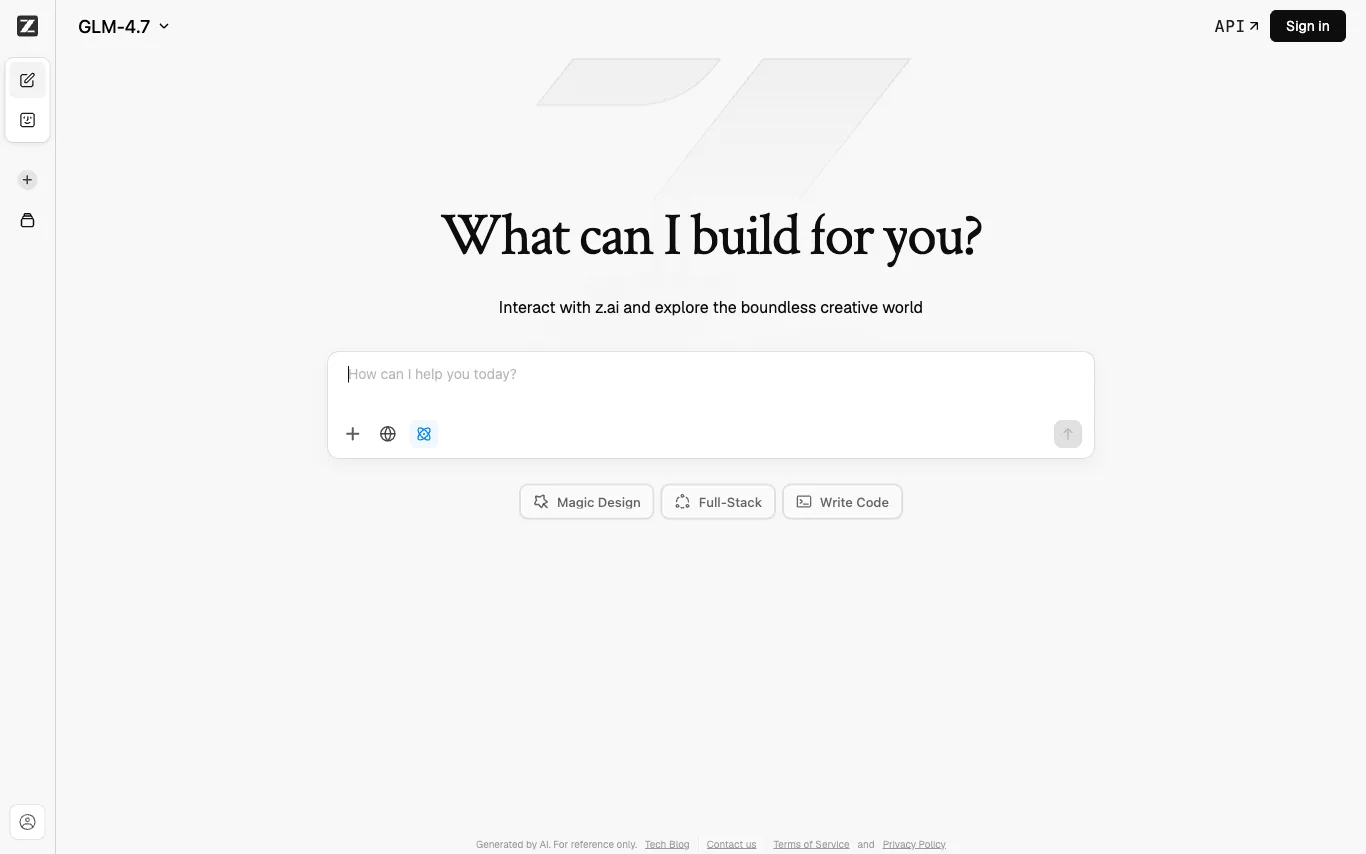

Z.ai is an advanced AI chatbot and agent platform powered by GLM-5.2, offering free chat with no login required. It handles long-horizon tasks including full-stack code generation, AI-powered slide creation (Magic Design), and deep research. An API is available for developers to integrate GLM models into their own applications.
Best AI Chatbot Tools (2026)
Compare AI chatbots for everyday help, customer support, website bots, character chat, and free plans — from general assistants to ChatGPT alternatives.

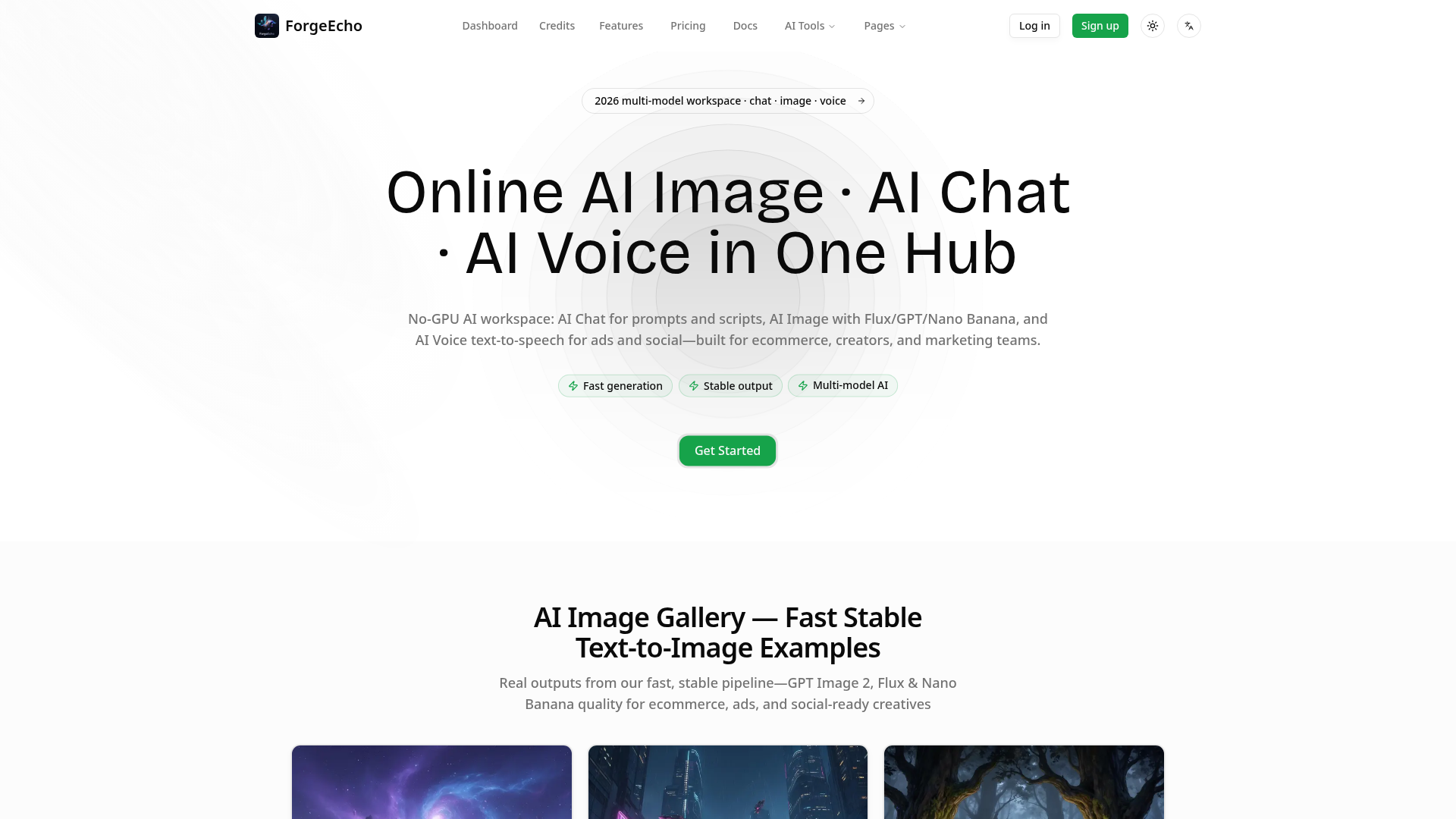
Online AI Image, AI Chat, and AI Voice in one hub for ecommerce, creators, and marketing teams.
Related categories
What is an AI chatbot?
An AI chatbot is a program you talk to in plain language, powered by a large language model (LLM). It replies in context, remembers earlier turns, and can search the web, read documents you upload, or call other tools. They range from general assistants like ChatGPT and Claude to narrow bots embedded on a website to answer customer questions.
Core features to look for
- Natural multi-turn conversation with context across a session
- A capable model underneath (GPT, Claude, Gemini, or open-source)
- Memory of past messages, sometimes across chats
- Answers grounded on your own docs, site, or knowledge base
- Tool use: web search, code, image generation, API calls
- Deploys as a web app, mobile, embeddable widget, or API
Who uses AI chatbots, and how
01
General assistant chat
Draft text, ask questions, brainstorm, and learn with an everyday writing partner.
02
Customer support & website bots
Answer buyers instantly with a bot trained on your docs, and capture leads.
03
Character & companion chat
Talk to roleplay characters and companions for fun, practice, and creative writing.
04
Developer & coding help
Explain code, generate snippets, and debug inside your editor or terminal.
How does an AI chatbot work?
Most chatbots run on a large language model trained on huge amounts of text. Given your message and the earlier conversation, it predicts a helpful reply token by token. Bots that answer from your content add retrieval — pulling relevant passages from your documents first — and extras like web search or code execution are added as tools the model can call.