


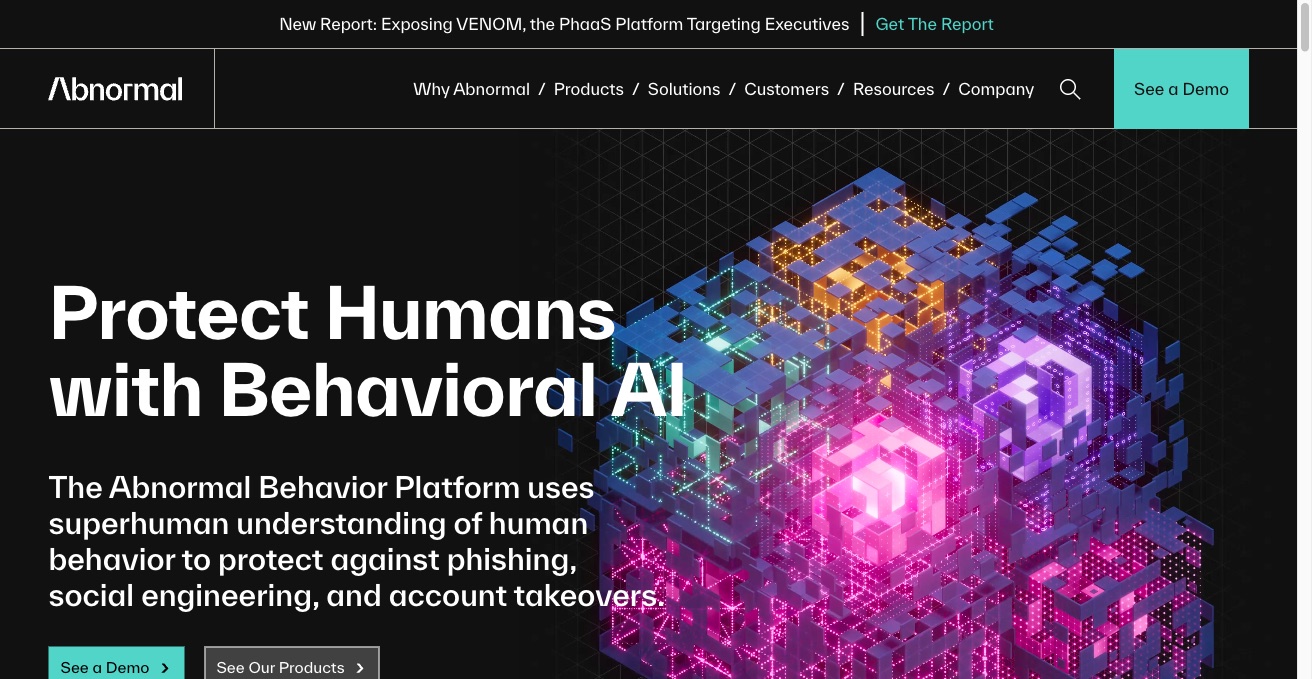

Abnormal is a cloud email and SaaS security platform that models user behavior to autonomously detect phishing, business email compromise, and account takeovers across Microsoft 365, Google Workspace, and connected SaaS apps.
Best AI Workflow Tools (2026)
Compare AI workflow tools for automating multi-step tasks, building AI agents, connecting apps, and running no-code pipelines — from Zapier and Make to n8n, Dify, and Coze.


Basis builds AI agents specifically for accountants. The agents handle tax prep, bookkeeping, and client workpapers across QuickBooks, Xero, and major accounting platforms.
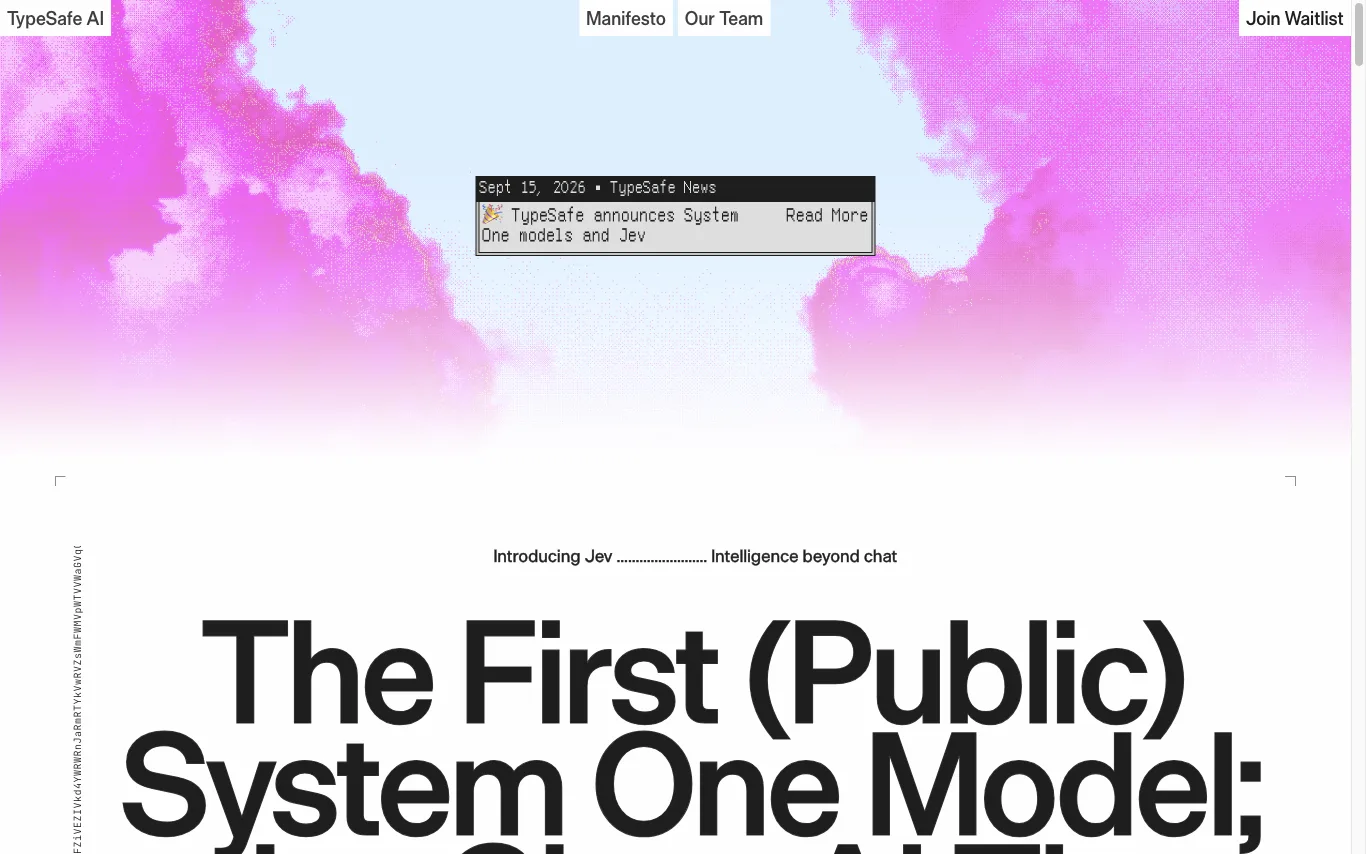

TypeSafe AI is a San Francisco lab building System One models for automation. Its first public model, Jev, answers typed questions against a state and returns structured decisions code can act on.
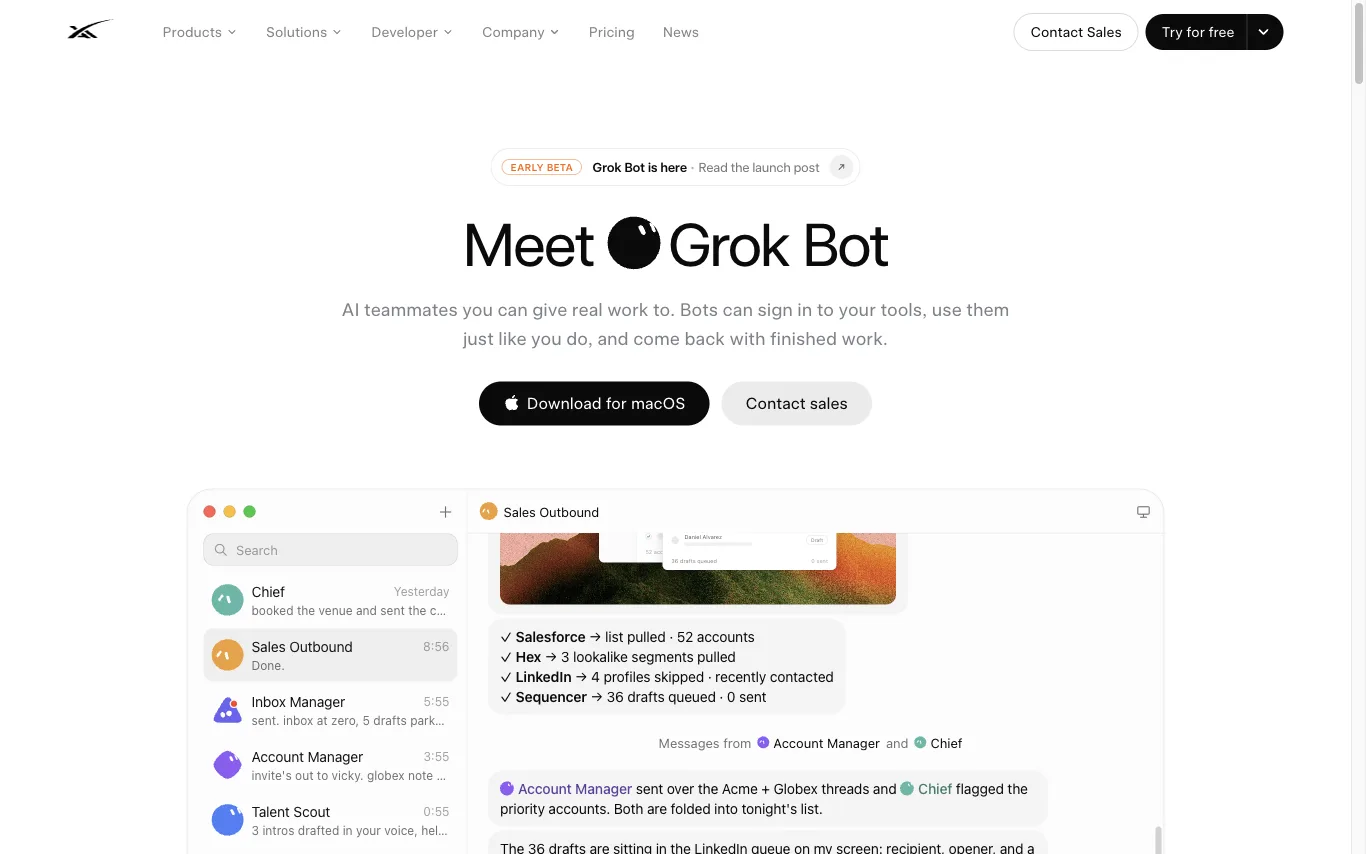

Grok Bot is SpaceXAI's agent product. Bots share a persistent cloud computer, log in to your apps, run in parallel around the clock, and return completed work for review.
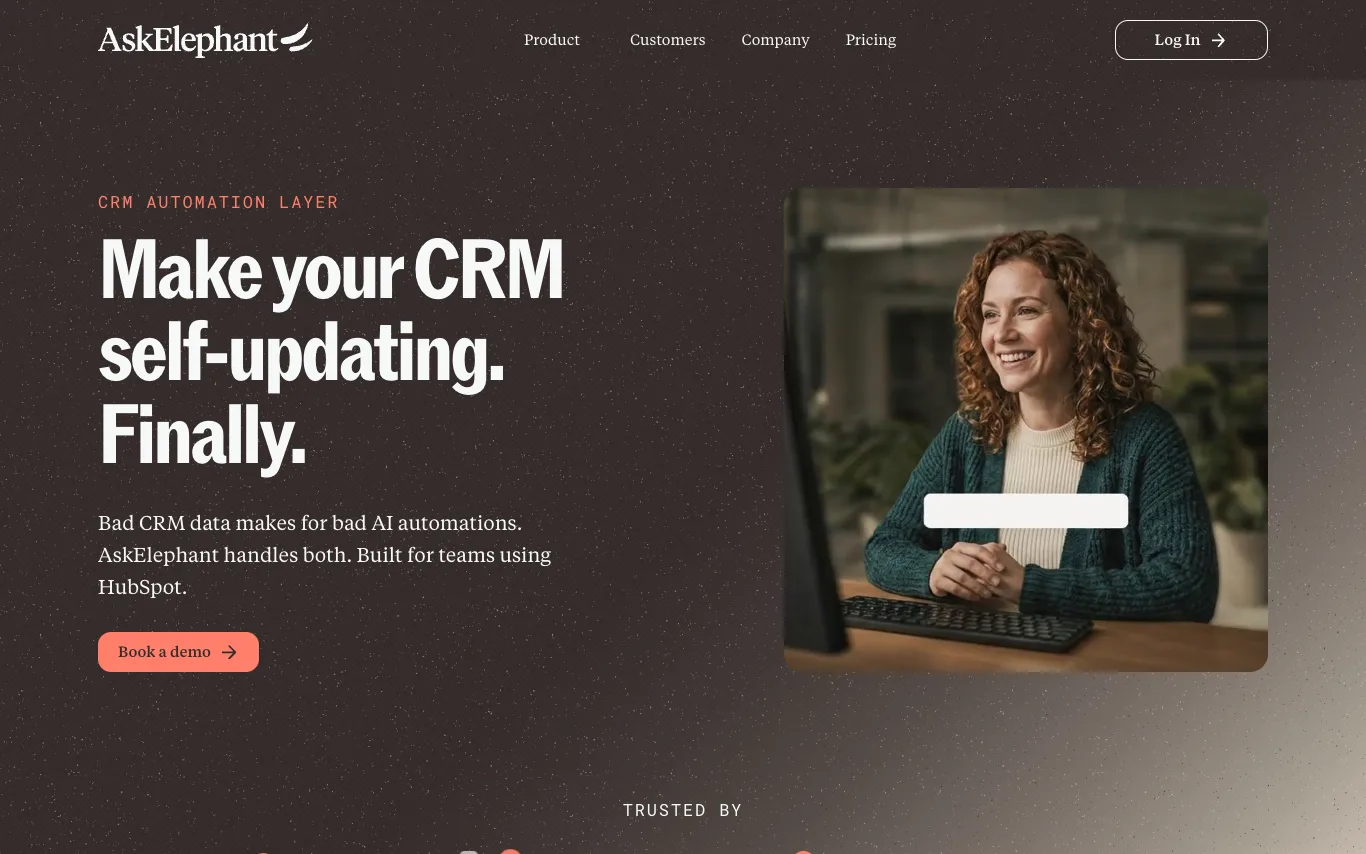

AskElephant is a CRM automation layer that uses AI-native workflows to keep your CRM data accurate and up-to-date. It is designed for teams using HubSpot, handling both bad CRM data and AI automations. The platform captures call details, reduces CRM errors, and speeds up intervention, as evidenced by customer case studies.


Cofounder is an AI company operating system for founders, coordinating engineering, sales, marketing, design, finance, and operations agents. It provides a full roadmap tailored to your company, guiding you through steps to start, build, sell, and scale. Agents work alongside you, requiring approval for potentially dangerous actions. It is fully extensible with MCP, custom APIs, skills, or custom codebases.


KYRO AI is a platform built for Construction, Vegetation, and Storm Restoration management. It replaces seven tools, from storm call rosters to getting paid in 24 hours. The platform streamlines field communication, documentation, and invoicing for utilities, contractors, linemen, and capital providers. It offers features like timesheets and invoices, access to working capital, and project management.


Lium is a workflow automation platform that enables users to connect and analyze their data. It provides a chat-based interface where users can ask questions about their data and receive insights. The platform includes pre-built workflows for various domains such as weather, utilities, logistics, and finance, allowing users to quickly access specialized analyses.
Related categories
What is an AI workflow tool?
An AI workflow tool lets you chain models, apps, and logic into an automated pipeline that runs on a trigger or a schedule. Instead of writing glue code, you connect steps on a visual canvas — call an LLM, branch on its output, fetch data, and post the result — or hand a goal to an autonomous AI agent that decides the steps itself. They range from no-code builders like Zapier and Make to developer-focused and agent platforms like n8n, Dify, and Coze.
Key features of AI workflow tools
- Visual canvas to chain triggers, steps, and conditions
- Built-in LLM, embedding, and vector-database nodes
- AI agents that plan and pick their own steps
- Hundreds of app integrations and API connectors
- Branching, loops, and error handling between steps
- Runs on schedules, webhooks, or event triggers
Who uses AI workflow tools?
01
Non-technical automators
Marketers and ops staff who wire up repetitive tasks without writing any code.
02
Developers building agents
Engineers orchestrating multi-step LLM agents, RAG, and tool calls in code.
03
Business process teams
Teams automating approvals, data entry, and handoffs across their SaaS stack.
04
AI app builders
Founders shipping chatbots and internal tools on top of workflow platforms.
How AI workflow tools work
You define a trigger — an incoming webhook, a schedule, or a new record — then lay out the steps that follow. Each node does one thing: call a model, transform data, branch on a condition, or hit an external API, passing its output to the next. Agent-based tools flip this: you describe a goal and give the model tools, and it decides which steps to run and in what order.