

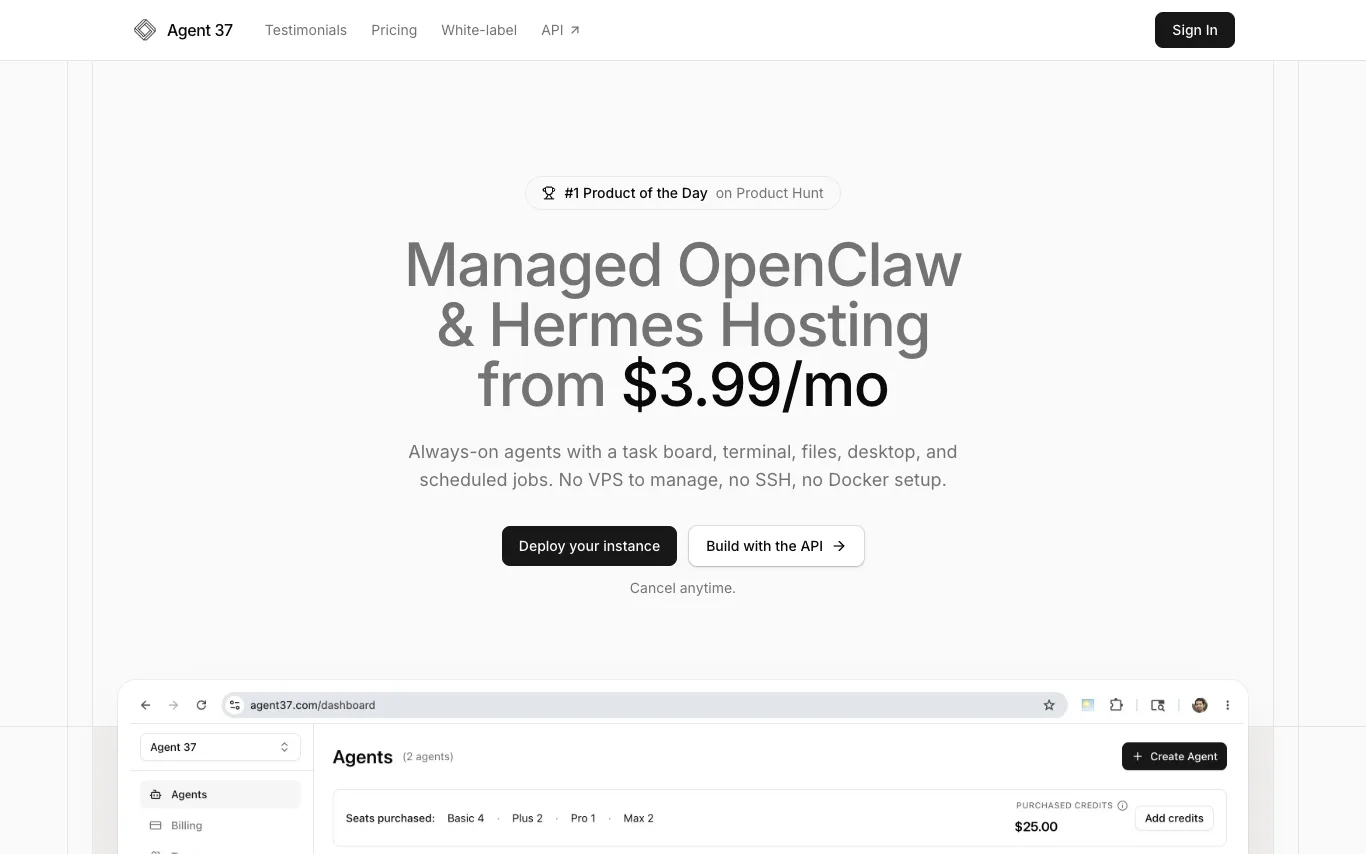

Agent 37 is a managed hosting platform for OpenClaw and Hermes AI agents. It provides always-on agents with a task board, terminal, files, desktop, and scheduled jobs, eliminating the need to manage a VPS, SSH, or Docker setup. Users can deploy instances from $3.99 per month and cancel anytime. The platform includes a web terminal, visual file browser, and live desktop via noVNC. It integrates with Gmail, WhatsApp, Slack, GitHub, and 1000+ more via Composio. Agent 37 emphasizes trust: data stays in the user's container, no training on user data, and bring-your-own-model-key support. Pricing tiers range from Basic to Max, with options for white-label and a Cloud API.
AI Agent · 66 tools
Best AI Agent Tools (2026)
Compare AI agents for task automation, coding, tool use, autonomous workflows, and no-code or SDK agent builders.
All AI Agent tools
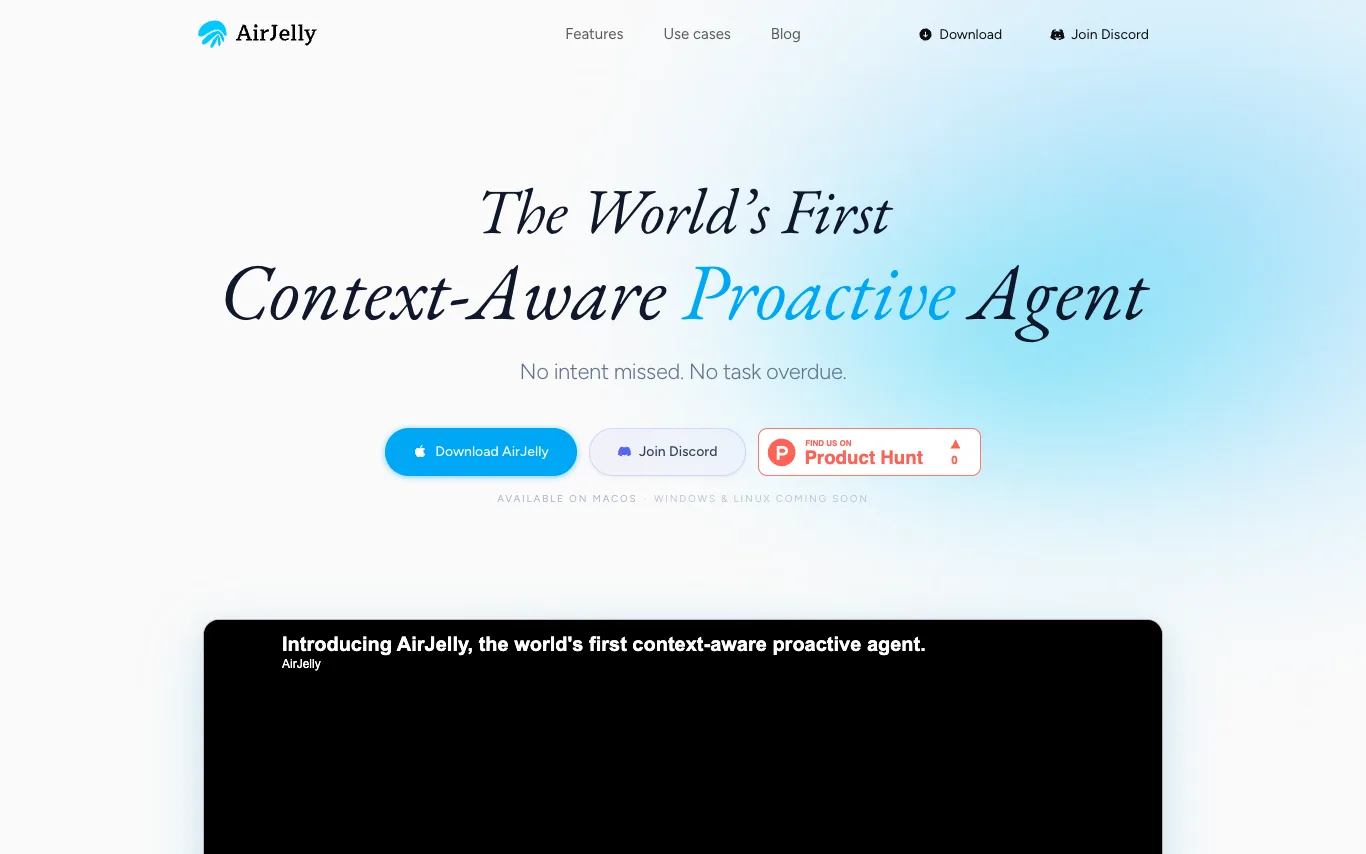

AirJelly is an always-on desktop AI that watches your workflow, remembers everything, and acts before you ask. It runs entirely local, reading across apps like Slack, Zoom, Docs, and Calendar to build a living timeline of your work. It surfaces what matters, creates tasks, prepares briefs, and sends reminders proactively. Available on macOS, with Windows and Linux coming soon.
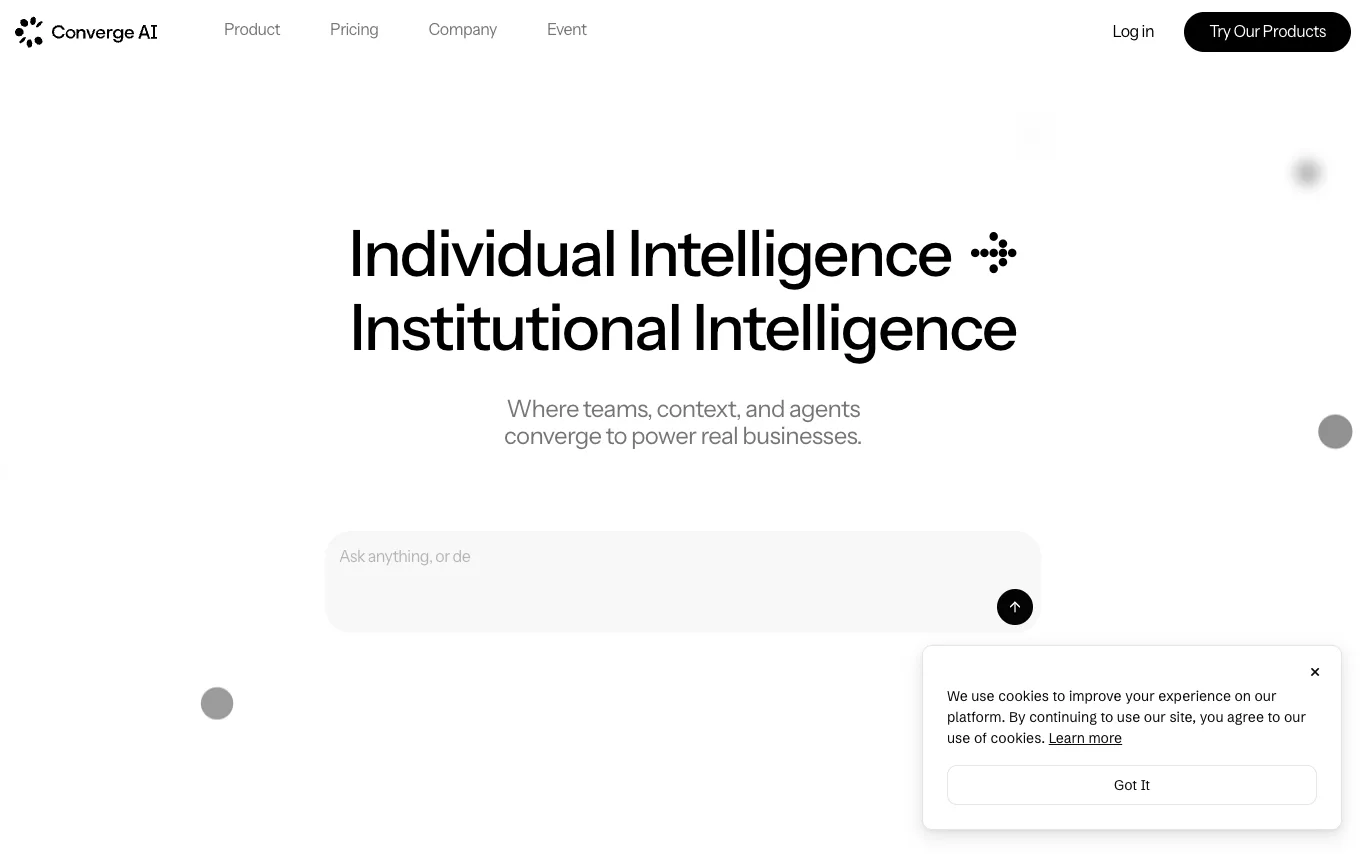

Converge AI is an all-in-one AI platform offering specialized AI products that share context across teams. It enables users to automate workflows and achieve real business outcomes without expanding headcount. The platform includes Enter Pro, an AI dev agent for building and deploying apps, and Framia Pro, a creative and marketing studio with AI agents for content creation. Converge AI emphasizes collaboration, results, and AI-native workflows.
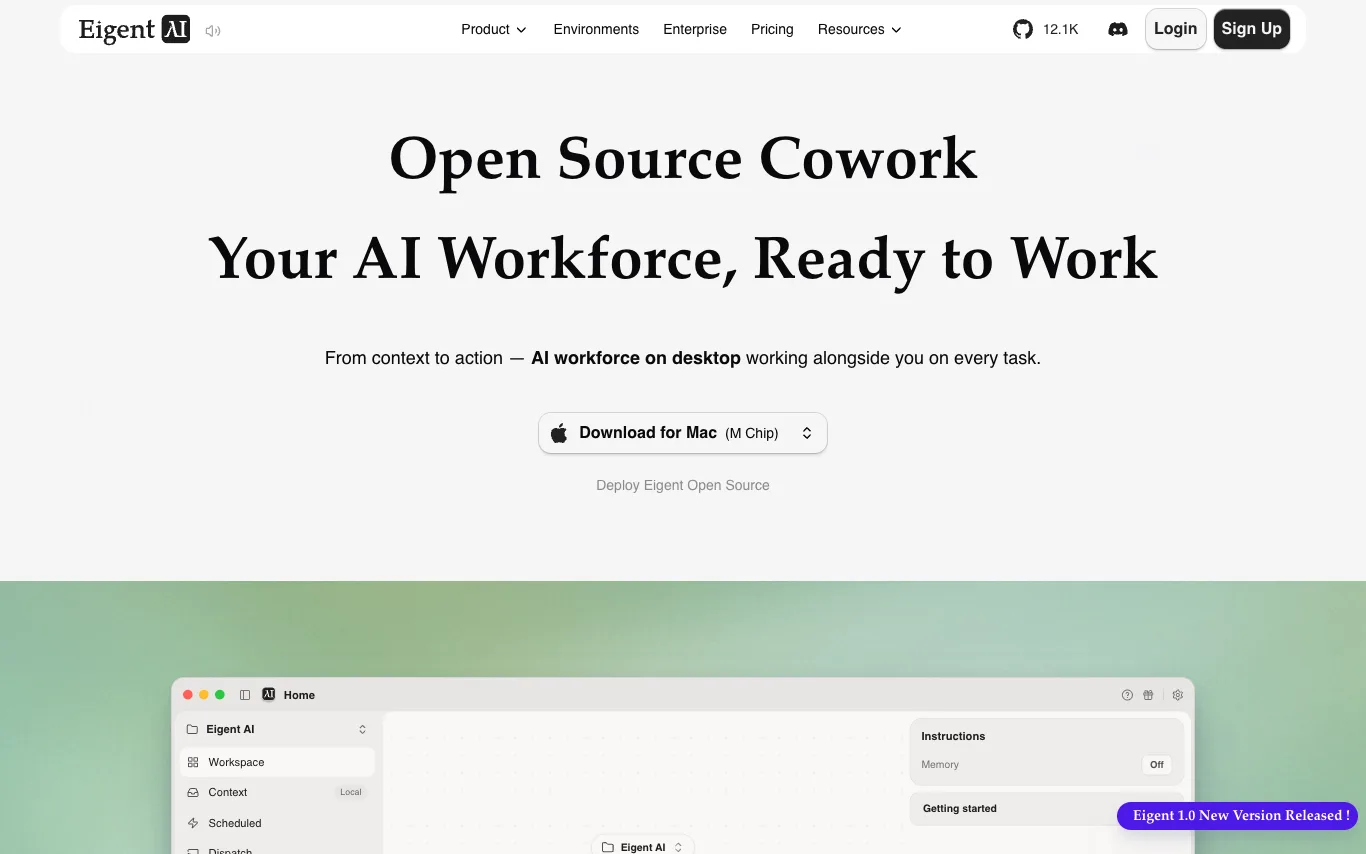

Eigent Open Source Cowork is a desktop multi-agent workforce that connects to your context and can control the browser and desktop apps to automate real work. It is 100% open source, allowing you to host it yourself for free with your own API keys or local models. The platform supports any model you like, including cloud APIs, enterprise gateways, or local inference, without locking into one vendor. With local-first execution, your files, credentials, and context stay under your control.
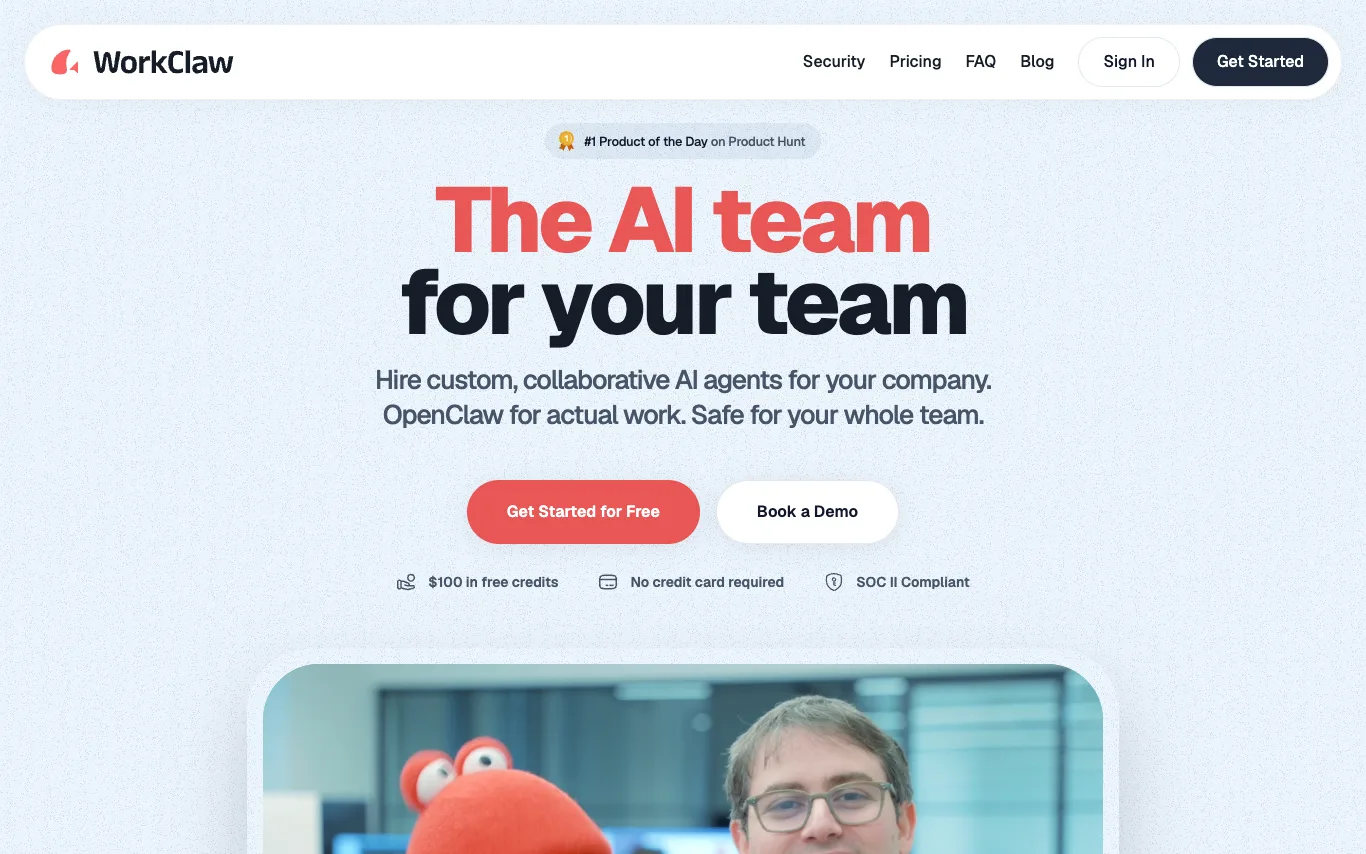

WorkClaw is a platform for creating and deploying custom, collaborative AI agents, called Claws, for teams. It is built on OpenClaw and offers pre-built Claws like Team Assistant, Chief of Staff, Software Engineer, Outbound Sales, Research Analyst, Recruiter, Content Marketer, and Data Analyst. WorkClaw emphasizes security with SOC II compliance and provides $100 in free credits without requiring a credit card.
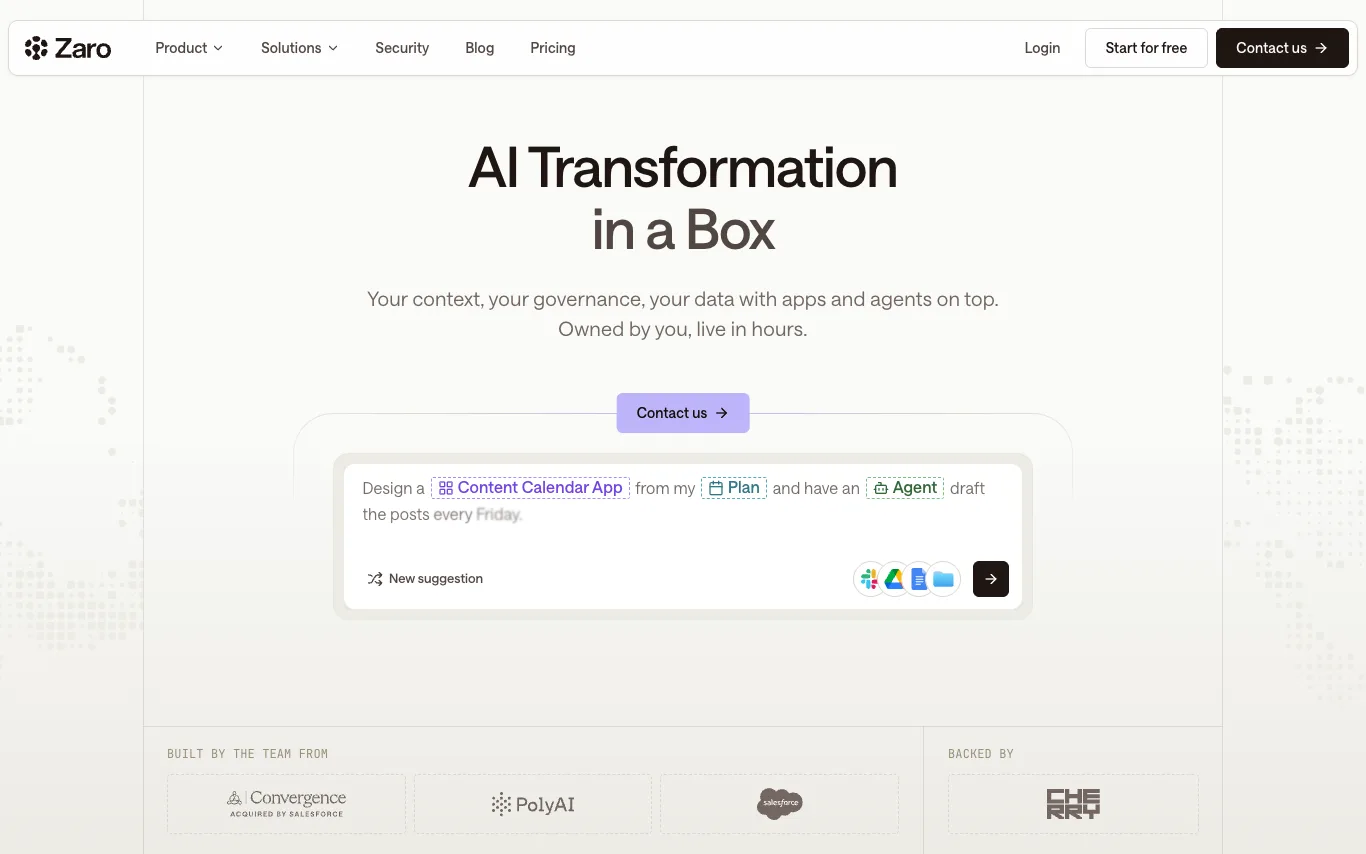

Zaro is an AI platform that provides a unified workspace where context, agents, and applications share one memory. It allows teams to capture documents, calls, decisions, and tickets in a versioned workspace, run agents on that data, and generate custom apps like dashboards and trackers. Zaro emphasizes data ownership, governance, and security, with features like access scoping, activity trails, and GDPR compliance. It is built by the team from Convergence, PolyAI, and Salesforce, and is backed by Cherry Ventures.
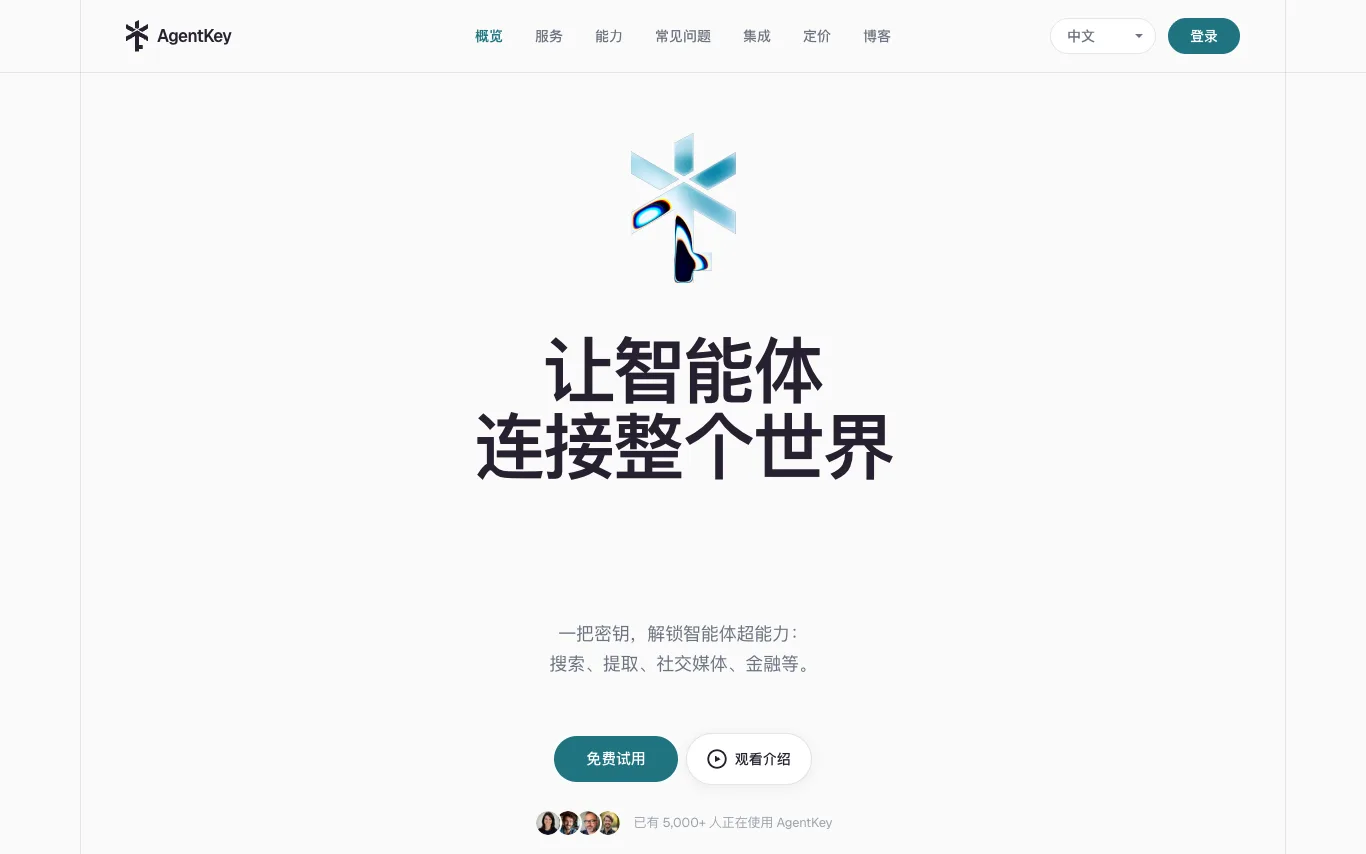

AgentKey is a data-access layer that gives AI agents live access to the outside world through a single MCP install. It supports multiple agents including Claude Code, Codex, Cursor, Windsurf, Gemini CLI, and more. With one subscription, agents can access search, extraction, social media, and finance data from providers like Brave, Tavily, Serper, Firecrawl, X/Twitter, Reddit, YouTube, and Yahoo Finance. AgentKey simplifies integration and billing, allowing agents to act on real-time data.
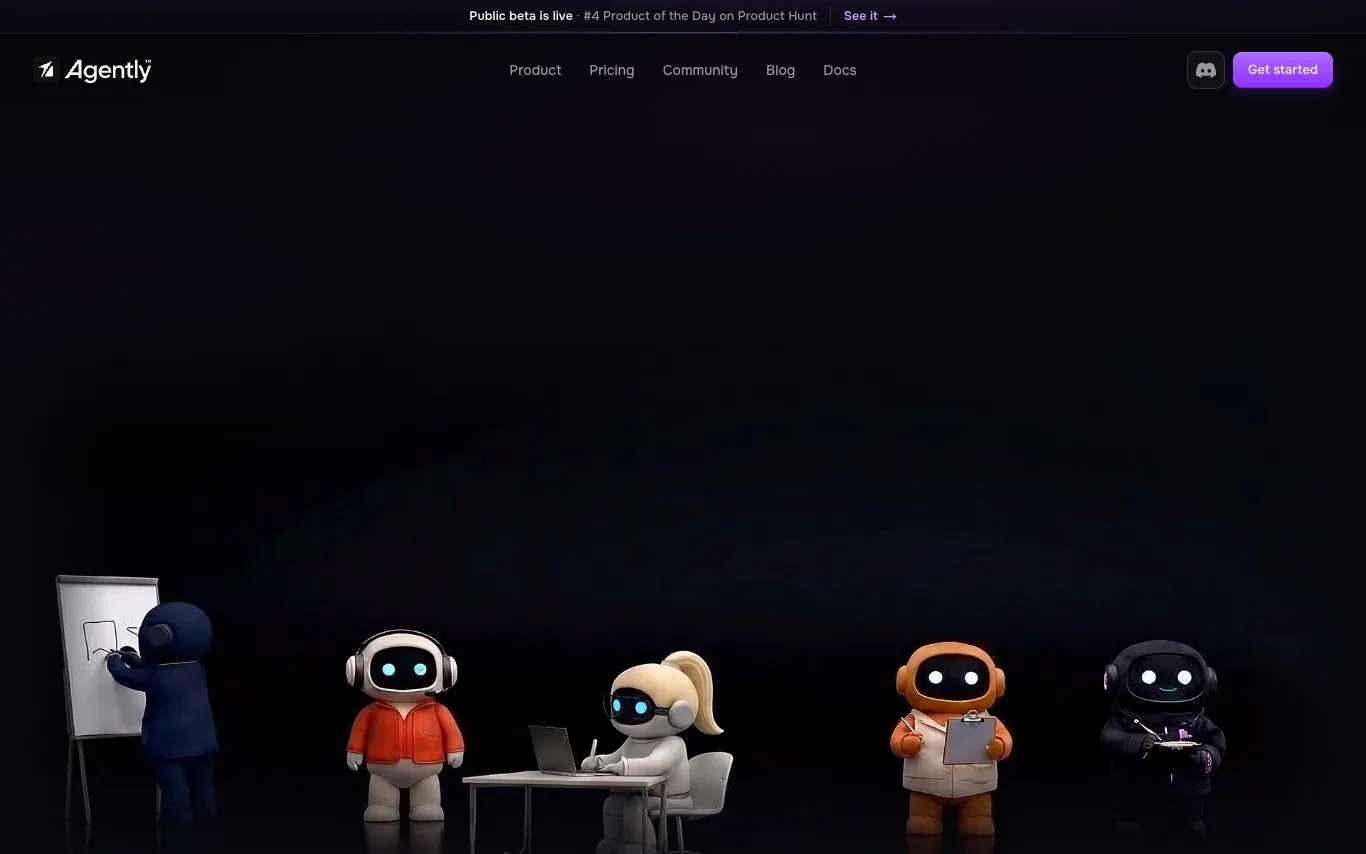

Agently builds a company brain across your whole stack, then spins up agents to handle the work, orchestrated by Jarvis. It connects to 100+ tools via MCP connectors, enabling two-way OAuth live updates. Agents can act autonomously or with approval, producing real artifacts like docs, presentations, and sheets. Plans start at $29/mo with a free tier and trial.
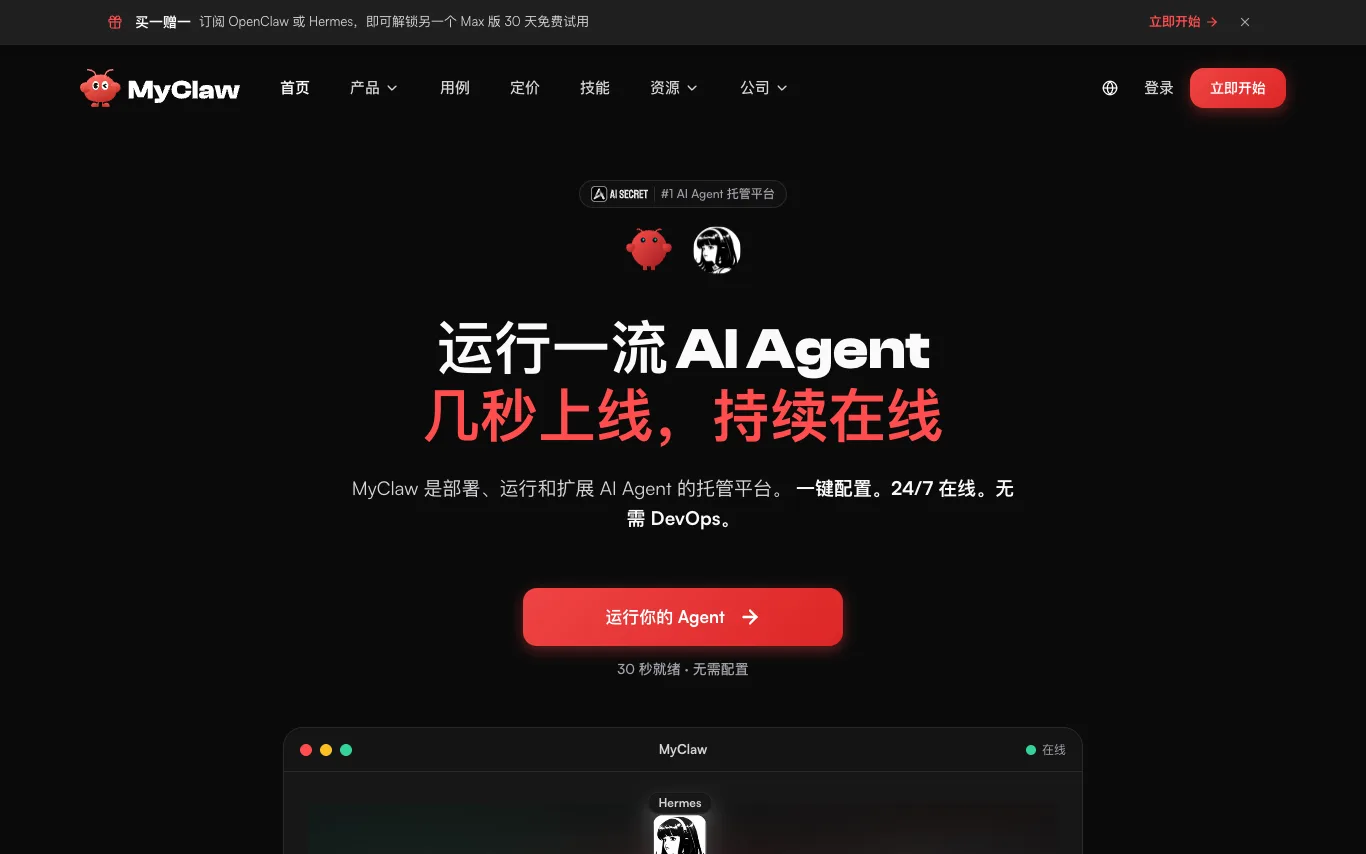

MyClaw is a managed platform for deploying, running, and scaling AI agents. It offers one-click setup, 24/7 uptime, and zero DevOps. Agents can browse, write code, generate files, and return results. Access via email, Telegram, WhatsApp, or browser, and connect to your existing tools and data. Agents work continuously on scheduled tasks like daily reports and price monitoring.
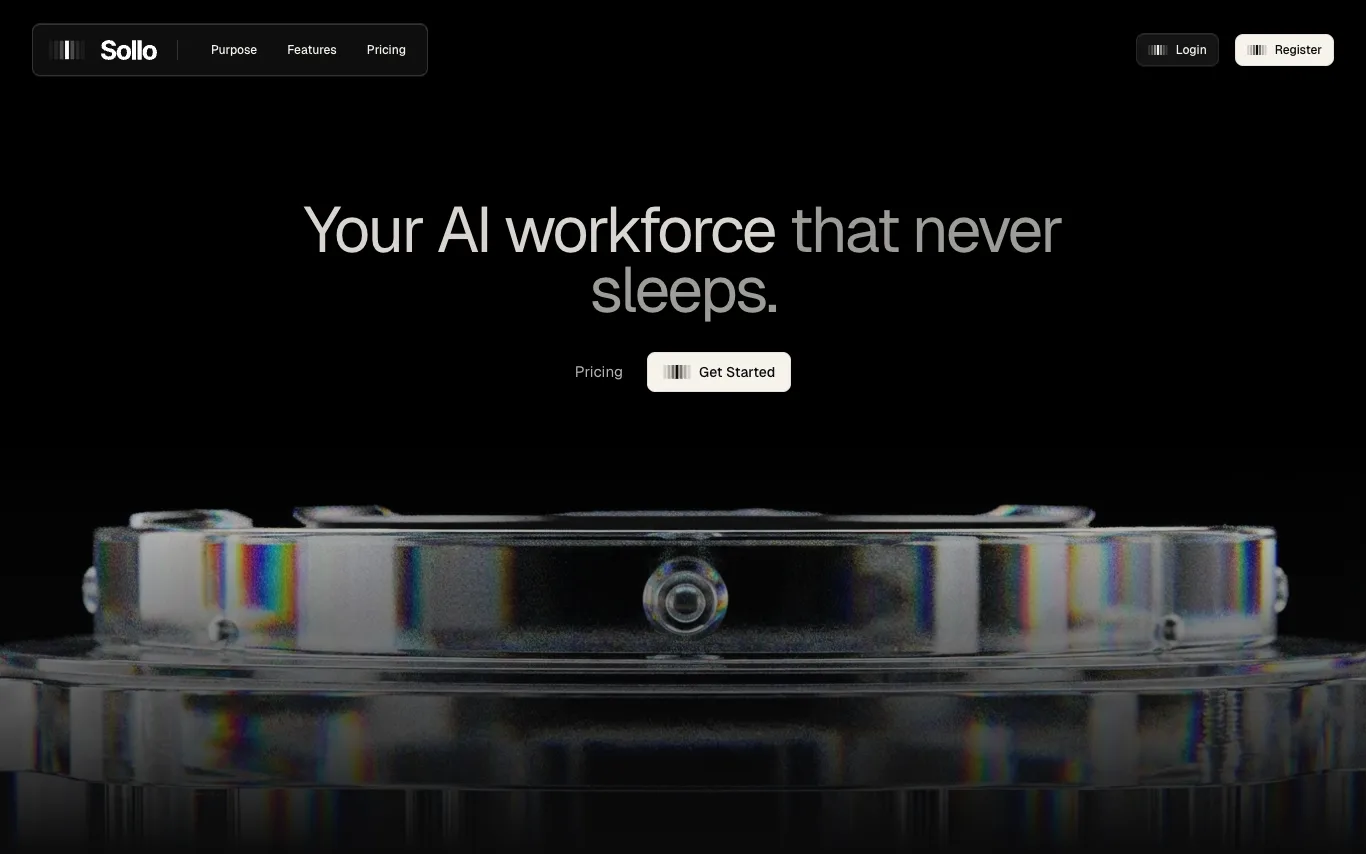

Sollo is an AI workspace for creating content, images, video, voiceovers, SEO assets, and automations from one dashboard. It brings together AI agents, automation workflows, and business tools into a single command center. Manage marketing, sales, customer support, and operations without hiring a team. Built for solo entrepreneurs who want the output of a full company.
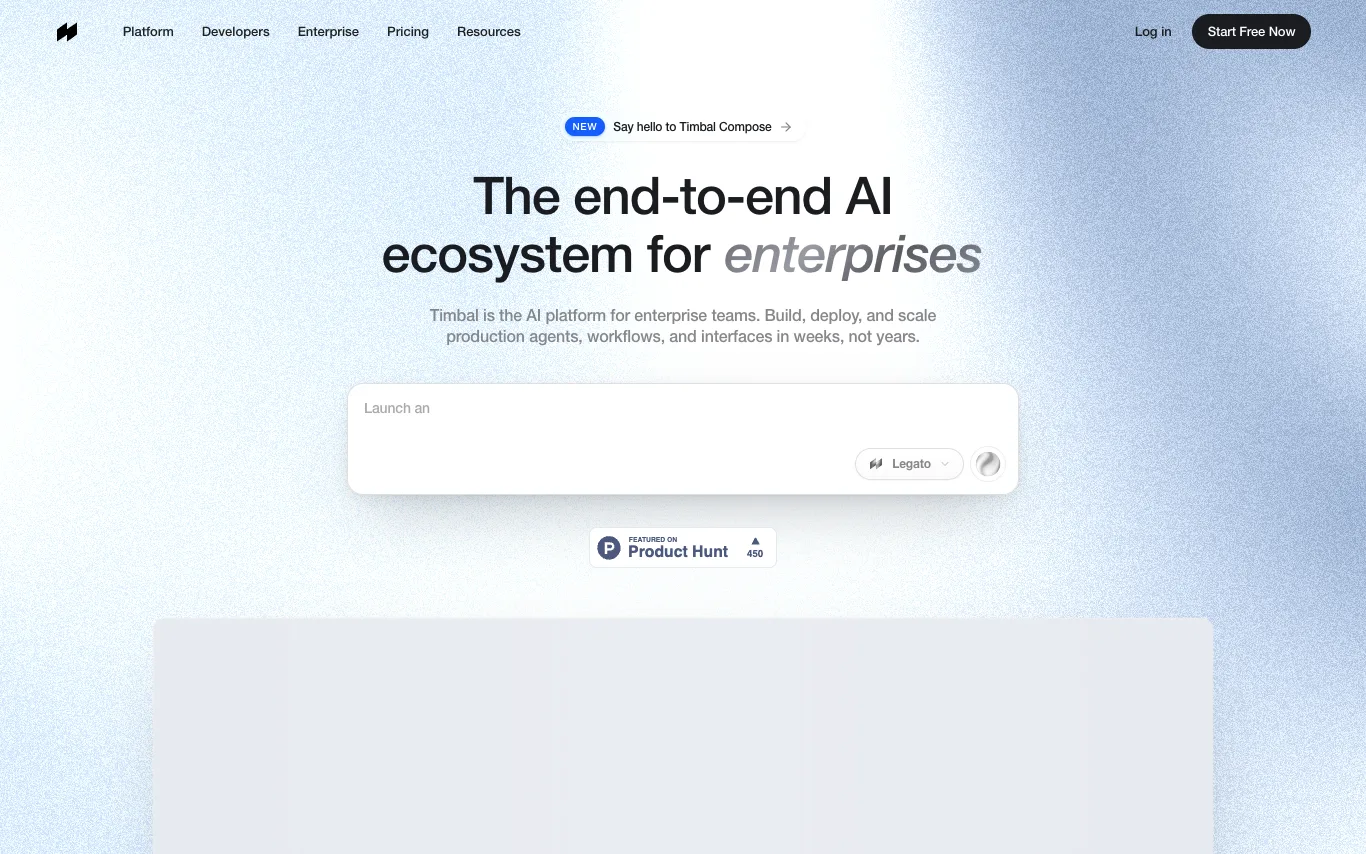

Timbal is the production AI platform enterprise teams use to build, deploy, and govern agents, workflows, and knowledge bases on the models they choose. It offers autonomous agents, deterministic workflows, custom interfaces, enterprise-grade RAG, and 100+ native integrations. Everything you build is exportable code, ensuring no vendor lock-in.
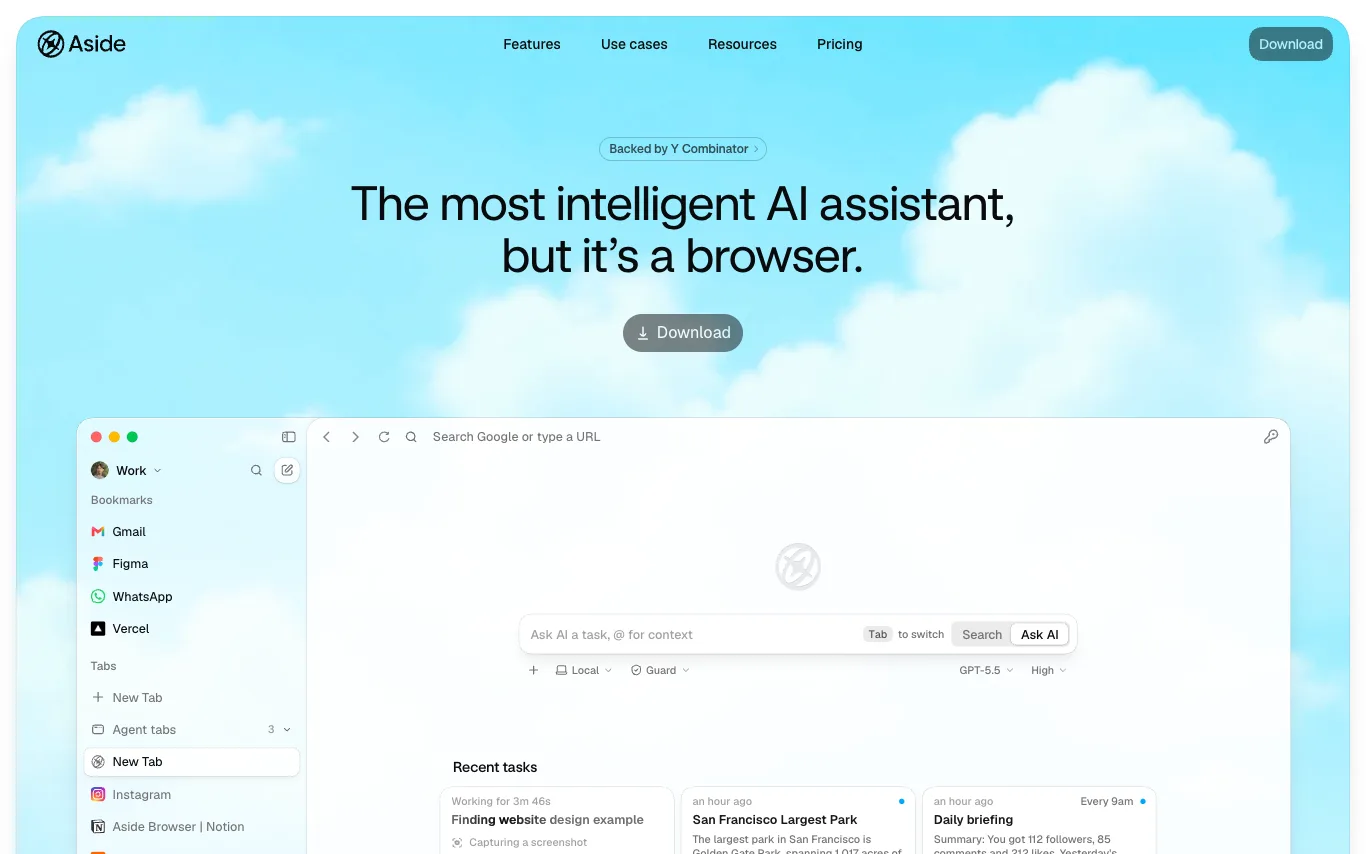

Aside is a browser rebuilt for people and agents. It works across your logged-in websites and handles complex work other agents can't: messages, payments, internal tools, and everything in between. Unlike other AI agents that rely on integrations, Aside uses websites and accounts directly. It ranks #1 on three browser agent benchmarks: Online-Mind2Web, BU-Bench-V1, and Odysseys. Memory stays local on your device and is never shared. The password manager lets agents sign in through autofill without exposing credentials to the AI.
What is an AI agent?
An AI agent is a system built on a large language model that can pursue a goal over multiple steps on its own — planning, calling tools and APIs, browsing, running code, and reacting to results — instead of just answering one prompt. Agents range from ready-made assistants to platforms for building your own.
Core features to look for
- Multi-step planning toward a goal, not single replies
- Tool and API calling (search, code, browsers, apps)
- Memory and state across a task or session
- Autonomy with optional human-approval steps
- Build-your-own with no-code or an SDK/framework
- Multi-agent teams that delegate subtasks
Who uses AI agents, and how
01
Task automation
Automate research, data entry, outreach, and repetitive multi-step workflows end to end.
02
Coding agents
Plan, write, and edit across a codebase, run commands, and fix failures autonomously.
03
Build-your-own
Use no-code builders or SDKs to create agents wired to your own tools and data.
04
Customer & ops
Agents that resolve tickets, take actions, and coordinate across business apps.
How does an AI agent work?
An AI agent wraps a language model in a loop: it plans the next step, picks a tool or action, runs it, reads the result, and repeats until the goal is met. Access to tools, APIs, memory, and sometimes other agents is what turns a chat model into something that acts, not just answers.