

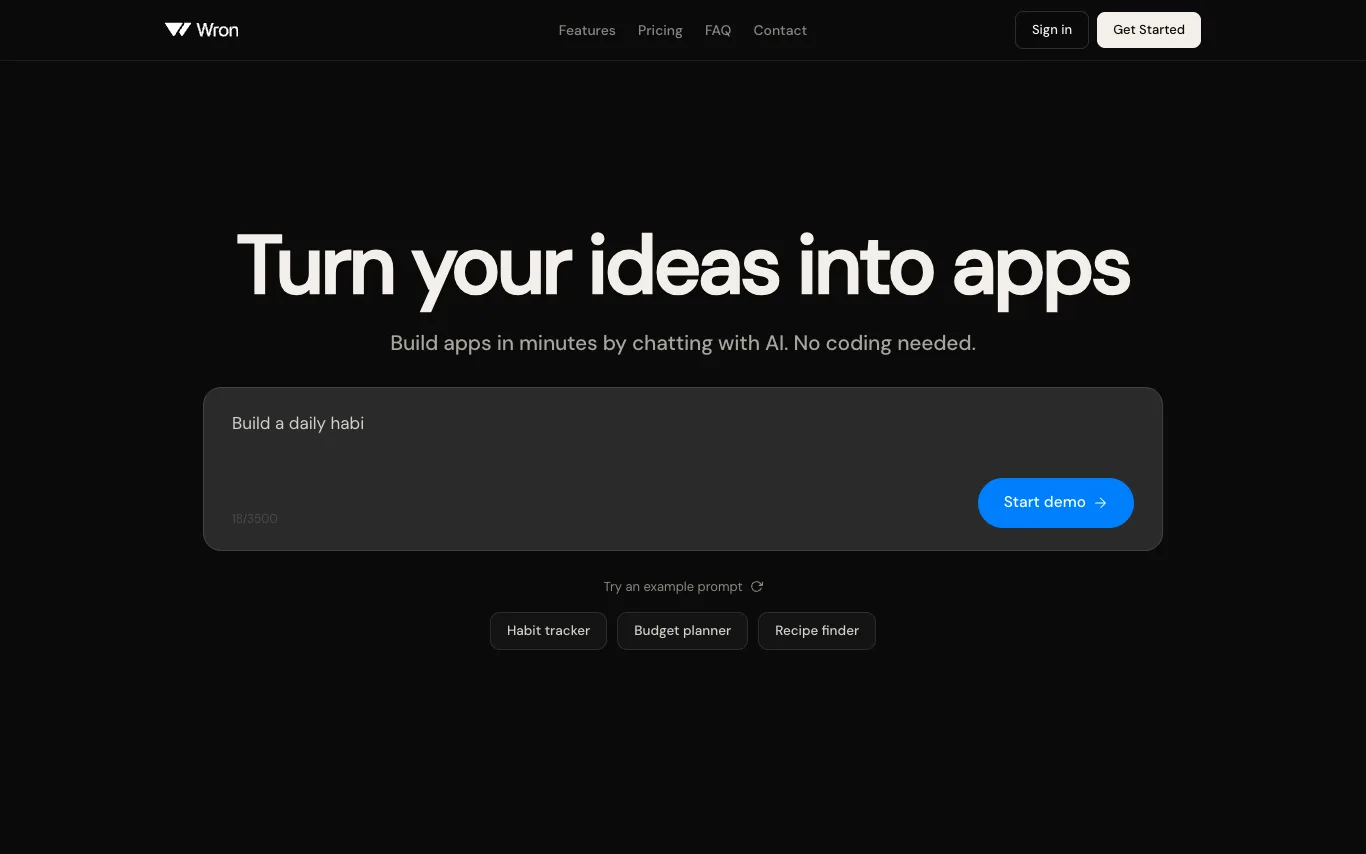

Wron is an all-in-one app studio that tracks profitable niches, builds them, and discovers winning ads you can copy. It allows users to build native apps by chatting with AI, without coding. The platform includes a Niche Finder to track app downloads and revenue, an App Builder for no-code app creation, and an Ad Library to find viral ad formats. Wron offers various pricing plans with credits for building apps and websites.
AI Analytics · 52 tools
Best AI Analytics Tools (2026)
Compare AI analytics tools for natural-language data queries, automated dashboards, insight discovery, anomaly detection, forecasting, and conversational BI.
All AI Analytics tools

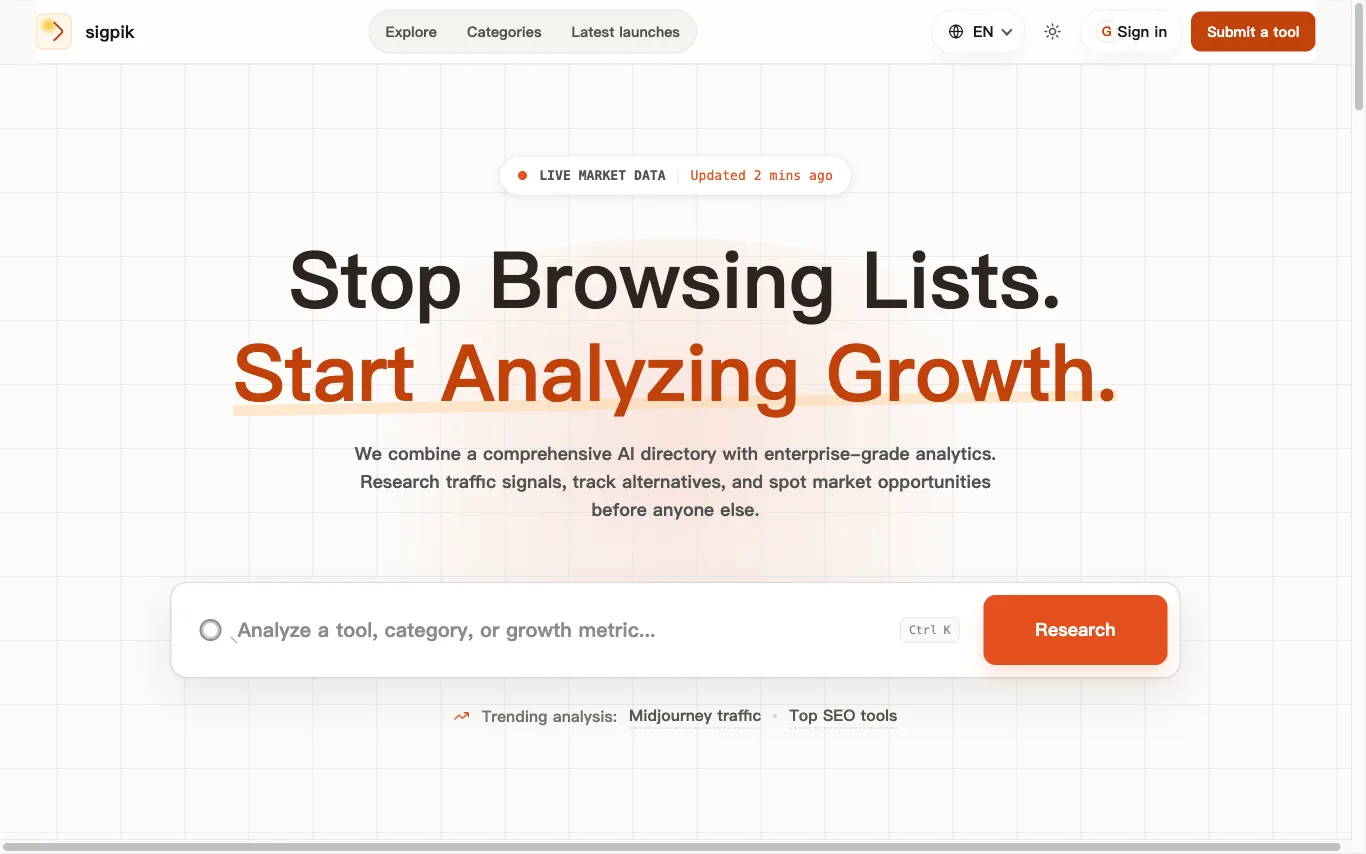


What is AI analytics?
AI analytics uses machine learning and natural language processing to explore data, surface insights, and answer questions in plain language instead of hand-written queries. It automates the slow parts of analysis — cleaning data, spotting patterns, flagging anomalies, and forecasting trends. Tools range from a conversational layer on top of a warehouse to full augmented-BI platforms that build the dashboards for you.
What AI analytics tools do
- Ask questions in plain language, get charts back
- Automated insight discovery across large datasets
- Anomaly detection with alerts on unusual metrics
- Forecasting and predictive models without code
- Auto-generated dashboards and narrative summaries
- Connectors to warehouses, spreadsheets, and SaaS data
Who uses AI analytics
01
Business teams self-serving data
Marketers, ops, and founders ask data questions without waiting on an analyst or writing SQL.
02
Data analysts speeding up work
Automate cleaning, exploration, and first-pass insights so analysts focus on the hard questions.
03
Product and growth monitoring
Track key metrics, catch anomalies early, and understand why the numbers moved.
04
Executives wanting plain-language reports
Get narrative summaries and forecasts from dashboards without reading raw data tables.
How AI analytics works
The tool connects to your data — a warehouse, spreadsheet, or app — and profiles it so it knows the columns and how they relate. When you ask a question, an LLM translates it into a query, runs it, and returns charts or a written answer, while statistical and ML models handle forecasting and anomaly detection. Many tools also scan data on a schedule to surface insights you never thought to ask for.